Latvia Independence Day: the celebration table — grey peas, pīrāgi and Riga Black Balsam
Latvia’s Independence Day falls on 18 November, the day the People’s Council proclaimed the Republic of Latvia in 1918. The celebration table is grey peas with speck — the national dish, eaten at Christmas for luck — crescent-shaped pīrāgi filled with smoked bacon, the sun-disc sklandrausis of Courland, and Riga Black Balsam, the 45% herbal liqueur of 24 botanicals first made by pharmacist Abraham Kunze in 1752.
Three countries share 18 November — Latvia, Morocco and Oman — but only one of them puts grey peas on the table. Latvia’s Independence Day is a young country’s oldest feast: a republic proclaimed in a theatre in 1918, defended in a two-year war, lost for fifty years and restored in 1991. This is that day’s table, dish by dish, from the pea fields of Kurzeme to the black balsam of Riga.
Latvia Independence Day: the celebration table — grey peas, pīrāgi and Riga Black Balsam
Today is Wednesday, 18 November — and in Riga, the flags are already out. On this day in 1918, exactly one week after the armistice that ended the First World War, the People’s Council of Latvia met in the Latvian National Theatre and proclaimed the Republic of Latvia, approving an interim government under Kārlis Ulmanis. It was a declaration made in a city still occupied by German troops, with the Red Army already advancing — the republic was proclaimed before it existed in any practical sense, and then had to be fought for. The War of Independence that followed ran until the Peace of Riga on 11 August 1920; the world recognised the new state on 26 January 1921. Latvia kept its independence until June 1940, lost it for fifty-one years, and restored it — declared on 4 May 1990, made real on 21 August 1991. That is why 18 November is the country’s Proclamation Day, and why the celebration is a quiet, stubborn one: candles in windows, flowers at the Freedom Monument, a concert, a family table, and a glass raised to a republic that was declared in a theatre and then defended, street by street, until it was true.
The table is the heart of it. Latvia’s celebration food is peasant food that refused to be embarrassed: grey peas with speck, little bacon buns shaped like crescent moons, dark rye bread, smoked sprats from the Baltic, and a black herbal liqueur older than the country itself. This is day eight of The Holiday Table — our daily feast from November 11 to February 20, drawn from the World Cuisines guide (781 dishes) and the World Spirits guide (266 drinks). We opened the season with St. Martin’s goose feast, ate at Angola’s freedom table, kept Friday fish day from the Mediterranean to the Pacific, closed the Diwali season at the Indian festival table, sat down to the British and Irish Sunday roast, and yesterday baked at the Levant’s bread table. Today the table is Latvia’s: grey peas with speck, pīrāgi, sklandrausis — and a glass of Riga Black Balsam.
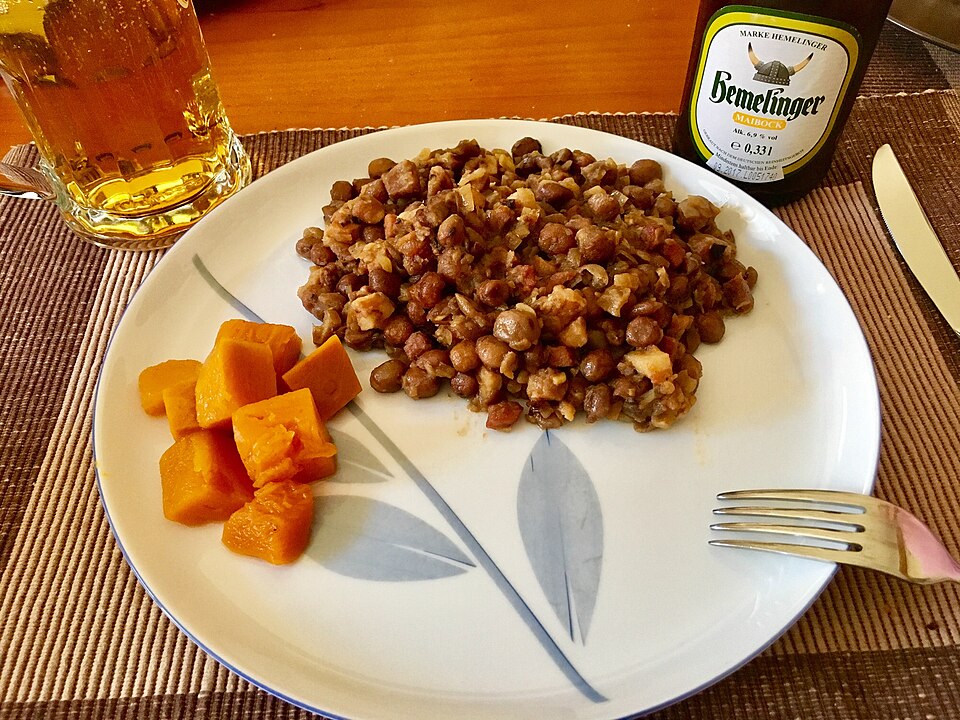
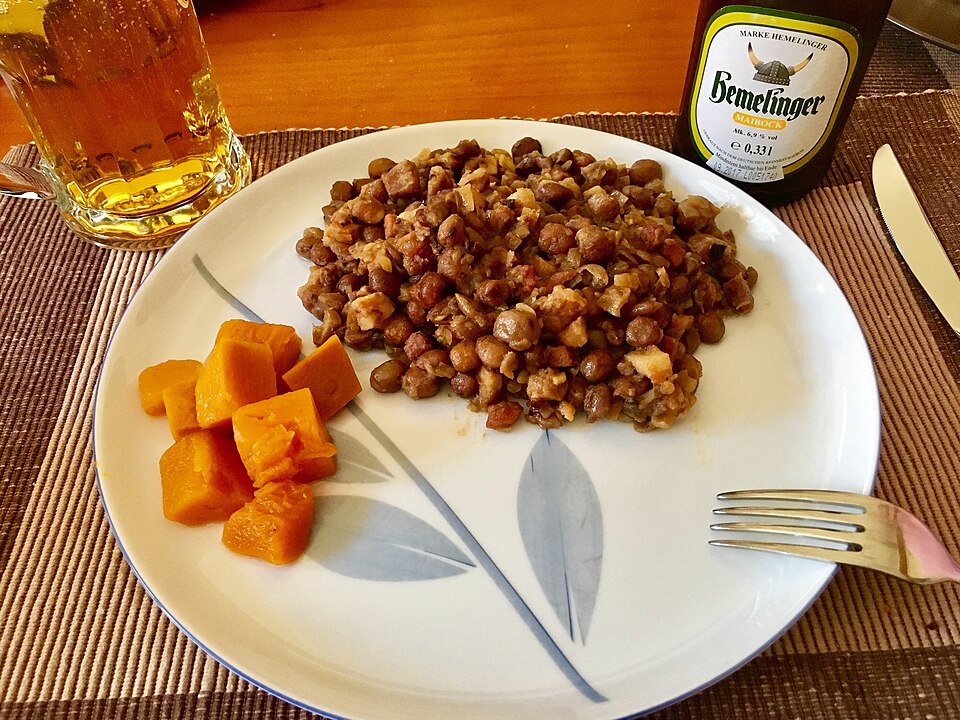
Pelēkie zirņi ar speķi — grey peas with speck, Latvia’s national dish, served with fried onion and bacon. From the World Cuisines Latvia collection.
The day, and the theatre where it began
The proclamation is the part of the story you can still walk into. The Latvian National Theatre stands on the canal in central Riga, white and green-roofed, and on 18 November 1918 the People’s Council — the Tautas padome — gathered there and declared the republic. The Latvian president’s own history page records it plainly: at the solemn meeting in the theatre, the council proclaimed the establishment of the Republic of Latvia and approved the interim government under Kārlis Ulmanis. The timing was audacious. The First World War was still formally running, empires were collapsing in every direction, and the whole territory of Latvia was occupied by the German army; the new government’s power was, in the words of one historian, rather nominal, and not even supported by the majority of the population. Within weeks the Red Army invaded, and the War of Independence began — a series of conflicts tangled into the Russian Civil War, fought against Soviet forces, German Freikorps and Bermontian troops, until the Peace Treaty with Soviet Russia was signed on 11 August 1920 and international recognition followed on 26 January 1921.
The day is still marked the way it was earned: solemnly, and then at the table. The president lays flowers at the Freedom Monument, whose pedestal reads Tēvzemei un Brīvībai — For Fatherland and Freedom. Families light candles in their windows. Choirs sing. And at home, the cooking is the old cooking — the dishes that kept people alive through the winters when there was nothing else in the larder, now served as celebration food precisely because they kept people alive. Grey peas are the centre of that table, and they carry a superstition with them: eat every pea in your bowl, because every pea left behind becomes a tear you will shed in the coming year. It is a joke told seriously at Latvian Christmas tables, and it is older than the republic by centuries.
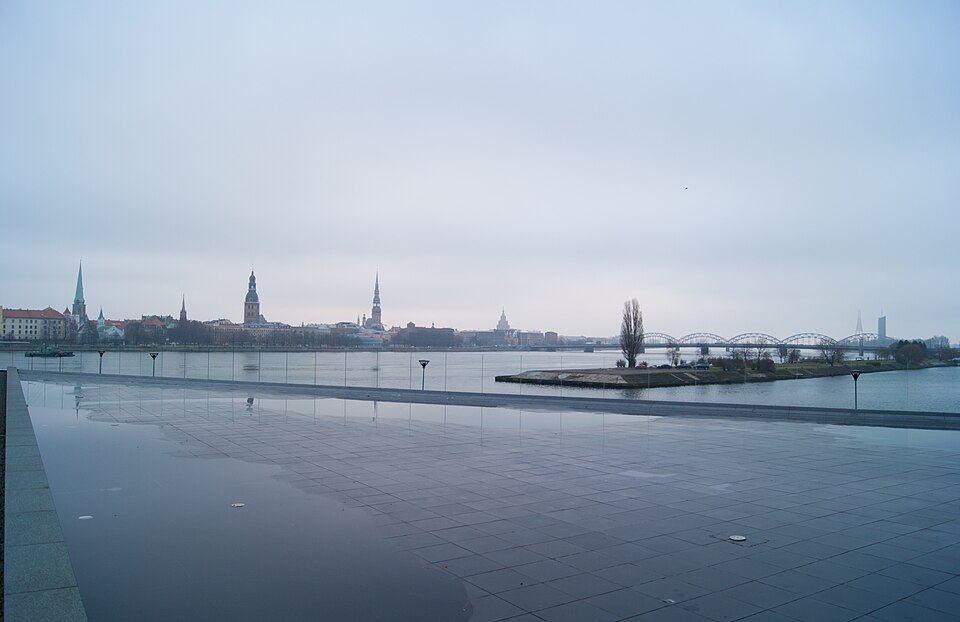
Riga across the Daugava — the Old Town spires where the republic was proclaimed in 1918. Photo: Wikimedia Commons.
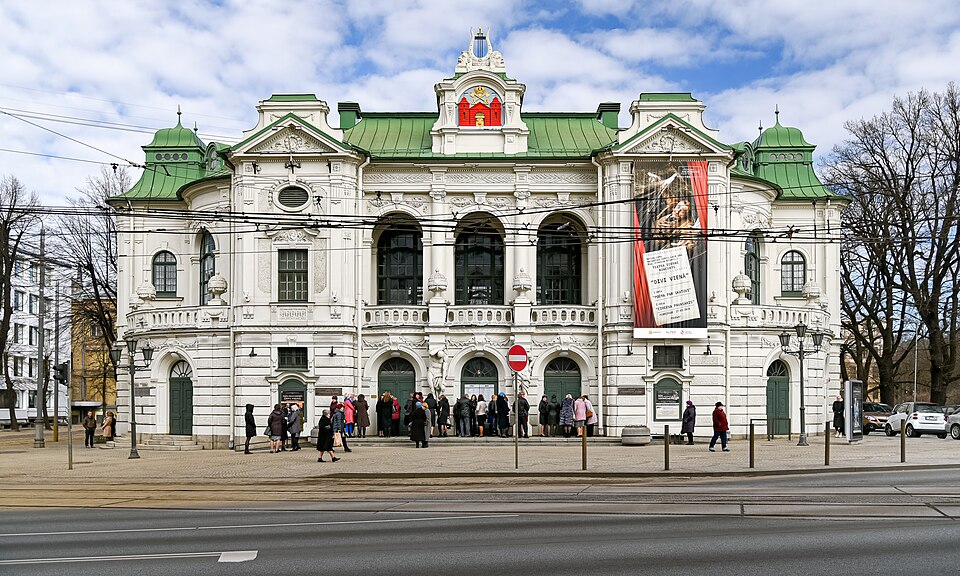
The Latvian National Theatre — in this building, on 18 November 1918, the People’s Council proclaimed the Republic of Latvia. Photo: Wikimedia Commons.
Latvia was declared in a theatre — and then defended until the declaration came true. The republic was proclaimed on 18 November 1918, fought for until August 1920, recognised in January 1921, lost in 1940 and restored in 1991. The table remembers all of it: the peas are older than the republic, and the balsam is older still.
The celebration table, at a glance
| The plate | What it is | What joins it at the table | In the guides | | Pelēkie zirņi | Grey peas with speck — large dried grey peas simmered tender, tossed with fried smoked bacon and onion | Kefir or sour cream, rye bread, a glass of beer | Latvia collection | | Pīrāgi | Crescent yeast buns filled with smoked bacon and onion, baked glossy gold | Warm, by the dozen — with the peas, or on their own | Latvia collection | | Sklandrausis | Rye-pastry tart filled with mashed carrot and potato, caraway and egg — the sun-disc of Courland | Milk or tea, eaten cold | Latvia collection | | Riga Black Balsam | Pitch-dark herbal liqueur, 45%, from 24 botanicals, first mixed in 1752 | Neat as a digestif, in coffee, or with blackcurrant juice | Latvia collection |
🇱🇻 Pelēkie zirņi — the national dish that is older than the nation
Pelēkie zirņi ar speķi — grey peas with speck — is Latvia’s national dish, and it is the plainest dish on this whole season’s table. Large dried grey peas, soaked overnight, simmered in fresh water until just tender and salted at the end; smoked speck — cured pork belly, diced — fried with onions until crisp and gold; the two folded together and served with kefir or sour cream. The World Cuisines Latvia collection gives the working recipe in four steps, and the flavour in four words: earthy, smoky, quietly rich. It is the dish you could make in a Latvian peasant house in February 1650 with what was actually still in the larder — dried peas store all winter, cured pork belly stores all winter — and it became the national dish because it is what kept everybody alive.
The pea itself is the point. Grey peas are a local landrace of field pea, small, round and matte grey-brown, bred for the short, cool, damp summers of the Baltic coastal plain — not the sweet green garden pea of the supermarket freezer, but a floury, dense, storing pea. Latvians have eaten peas for hundreds of years: peas, barley and beans were the main dishes of the early centuries, and they stayed important until the potato era began in the 19th century. The variety is protected now — in October 2015 the European Union entered Latvijas lielie pelēkie zirņi, the large grey peas of the Retrija cultivar, on its register of protected designations of origin — and the State Institute of Crop Production at Priekuļi is probably the only place in the world where large grey peas are selected and grown for food.
The dish belongs to Christmas. Latvia Travel puts it plainly: every Latvian associates grey peas with Christmas, when grey peas with bacon are traditionally on the table as one of the main dishes. The winter solstice feast, Ziemassvētki, runs on a nine-dish rule — taste nine different foods on solstice night to ensure abundance in the coming year — and grey peas are one of the essential nine, alongside roast pork, sauerkraut, blood sausage and gingerbread. And the peas carry their famous superstition: the round pea stands for a tear, so eating them at New Year gets the tears out of the way — and every pea left in the bowl becomes a tear you will shed next year. Not a single pea, the tradition says, shall be left on the table. Supermarkets stock grey peas in bulk from November; the state recognises the preparation as intangible culinary heritage; and on 18 November, the same peas that guard the Christmas table guard the Independence Day table too — because a dish that kept a people alive through occupation and winter is exactly the dish you serve on the day you celebrate still being here.
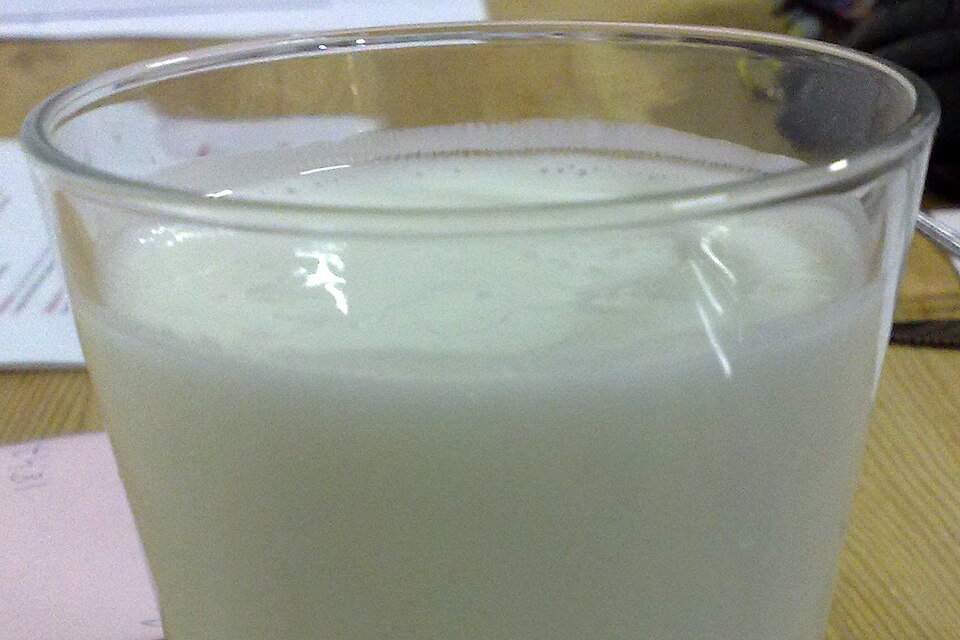
Kefir — the sour-milk glass that cools the grey peas and chills the summer soup. Photo: Wikimedia Commons.
Eat every pea. The round seed stands for a tear: eat them all at New Year and the tears are spent — leave one behind, and it is a tear you will shed in the year to come. It is a joke told seriously at every Latvian Christmas table, and it is older than the republic by centuries.
🇱🇻 Pīrāgi — the crescent moons of the celebration
If the grey peas are the anchor of the table, pīrāgi are its hand-held joy: soft yeast buns shaped like little moons, filled with smoked bacon and onion, baked until glossy gold. The World Cuisines Latvia collection gives the craft: make an enriched dough — flour, milk, butter, yeast, sugar, eggs — and proof it until billowy; fry the bacon and onion and season with black pepper and a whisper of caraway; cut rounds, fill, fold and pinch into crescents; bake until golden. Serve warm, by the dozen. The flavour is buttery, smoky, gently spiced — and the shape is the story. Their crescent is said, in the old telling, to echo the crescent moon of solstice nights — a legend, labelled as such, but one the shape keeps telling every time a tray comes out of the oven.
Pīrāgi mark the two great Latvian feasts at once: Jāņi, the midsummer solstice, and Christmas. At Jāņi the buns are eaten around the bonfire with caraway cheese and beer; at Christmas they sit beside the grey peas on the nine-dish table. The small bacon-filled ones have their own name — speķrauši — and their own occasion: they are wedding food, the protein-rich pastry handed out at celebrations across all the Baltic and Slavic peasant cultures. And they travel. Diaspora Latvians in Toronto and Sydney bake pīrāgi as a taste of home, and the recipe survives the journey intact because there is so little to it: dough, bacon, onion, heat, and hands that know the pinch. If you have never made them, the test is simple — the bun should be soft enough to tear, the filling generous enough to see, and the tray should be empty within minutes of leaving the oven. In Riga, the bakeries of the Central Market sell them by the bag, and on 18 November the bags go home with everyone.
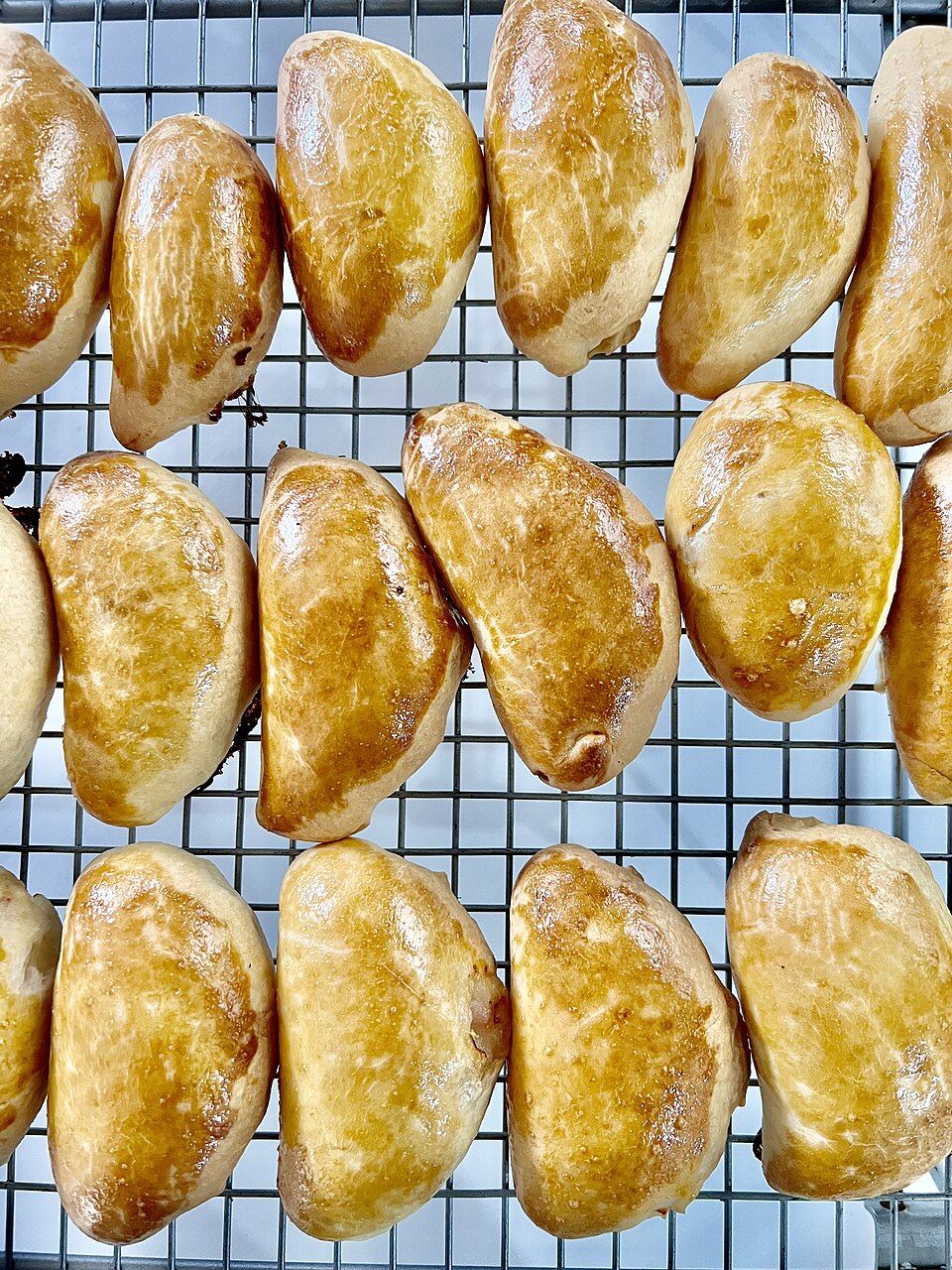
Pīrāgi fresh from the oven — glossy crescents of enriched dough around smoked bacon and onion. From the World Cuisines Latvia collection.
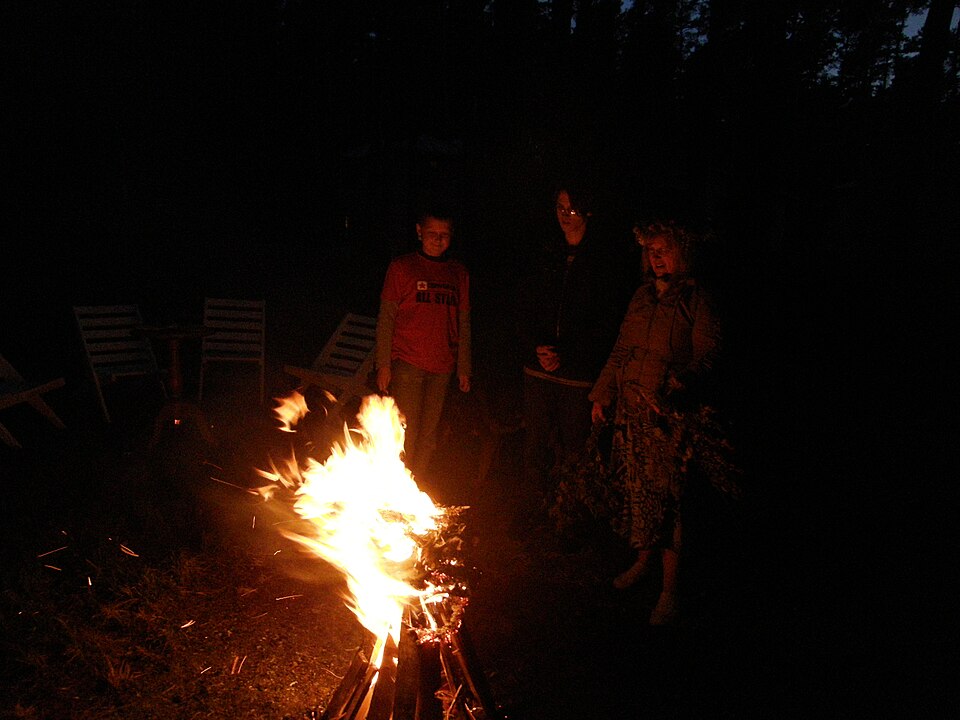
Jāņi — the midsummer bonfire, where pīrāgi are eaten under the shortest night of the year. Photo: Wikimedia Commons.
🇱🇻 Sklandrausis — the sun-disc of Courland
Sklandrausis is the prettiest dish on the Latvian table and the most protected: a rye-pastry tart filled with mashed carrot — or potato — caraway and egg, baked until the pastry is crisp and the filling bronzed. The World Cuisines Latvia collection calls it the sun-disc of Courland, and the name is the description: a round, golden disc, bright as a low northern sun, made in Skrunda and Alsunga for five hundred years. Make a firm rye dough; roll small rounds with raised rims; boil and mash the carrots with butter, egg and caraway; fill the discs generously; bake until crisp. Serve with milk or tea. The flavour is sweet carrot, caraway, rye depth — and the look is unmistakable: a little orange sun in a dark rye frame.
The dish belongs to Kurzeme — Courland, the Latvian west — and to the Livonian people who lived there; the name joins Latvian sklanda, a slope or fence, with rausis, the baked good. It is believed to date back at least to the 16th century, when grain and root vegetables were the cornerstones of everyday meals. And then, in 2013, it became law: on 11 October 2013 the European Commission entered sklandrausis in the register of Traditional Specialities Guaranteed (Regulation (EU) No 978/2013) — the first Latvian product ever to earn EU protected status. A festival dedicated to sklandrauši has been held in Dundaga, in Talsi Municipality, every year since 2013. The TSG specification is exact about the tradition — rye dough, potato and carrot paste, caraway — and the variations that exist anyway are part of the dish’s life: some cooks layer potato under the carrot, some dust the top with cinnamon, all of them agree on the rye. Latvia’s other TSG foods tell the same story: Jāņu siers, the caraway cheese of midsummer, and salinātā rudzu rupjmaize, the sweetened rye bread made without yeast, with caraway and rye malt — the bread that sklandrausis is baked from, and the bread that anchors the whole table.
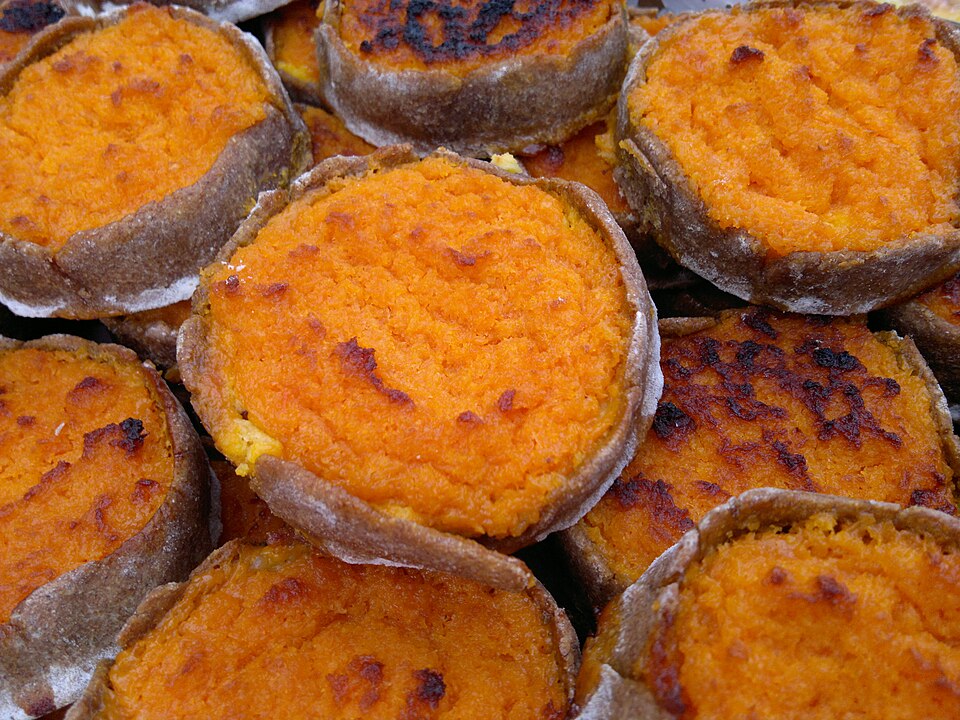
Sklandrausis — the sun-disc tarts of Courland, rye pastry filled with carrot and potato, the first Latvian product with EU protected status. From the World Cuisines Latvia collection.
🇱🇻 The Latvian table around the peas: rye, sprats and the pink summer soup
Grey peas do not eat alone, and the dishes around them are the rest of the Latvian larder. First, the bread: rupjmaize, the dark rye loaf, dense and sour and sweetened, baked in the Lāču bakeries and every village oven, sliced thick and buttered. It is the bread the grey peas are eaten with, the bread the sprats are laid on, and the bread that becomes dessert — rupjmaizes kārtojums, the layered trifle of rye crumbs, cranberries and whipped cream under chocolate shavings, the sweet that turns yesterday’s loaf into today’s pudding. The rye is the through-line of the whole cuisine: the same grain fills the sklandrausis, carries the sprats, and closes the meal.
Second, the fish: Riga’s smoked sprats, the Baltic’s small silver fish, laid on buttered rye as butterbrot — open sandwiches with grated cheese and parsley — the market snack that never leaves the table. They come from the same Central Market whose five great pavilions, built from former zeppelin hangars, stand by the Daugava with their fish halls and bread stalls and pickle barrels. If you want to understand Latvian food in one building, it is that market: peas by the kilo, rye by the loaf, sprats by the tin, caraway by the sack.
Third, the soup that belongs to the other half of the year: aukstā zupa, the cold soup of Latvian summer — kefir and pickled beets with cucumber, radish, dill and egg, served ice-cold when the heat arrives, with hot boiled potatoes on the side. The World Cuisines Latvia collection gives the method: grate the beets, whisk the kefir with beet brine, add the vegetables and dill, chill thoroughly, halve the eggs on top. The flavour is tangy, earthy, electric pink — and it belongs to the Baltic summer family that includes Lithuania’s šaltibarščiai, the shocking-pink soup that is that country’s most photographed bowl. Latvia’s version leans on pickled beet brine for its punch, and the temperature contrast — ice-cold soup, steaming potatoes — is the tradition. It is November now, and the soup is out of season; but the table remembers it, because a cuisine that survives a Baltic winter is a cuisine that knows exactly what summer tastes like.
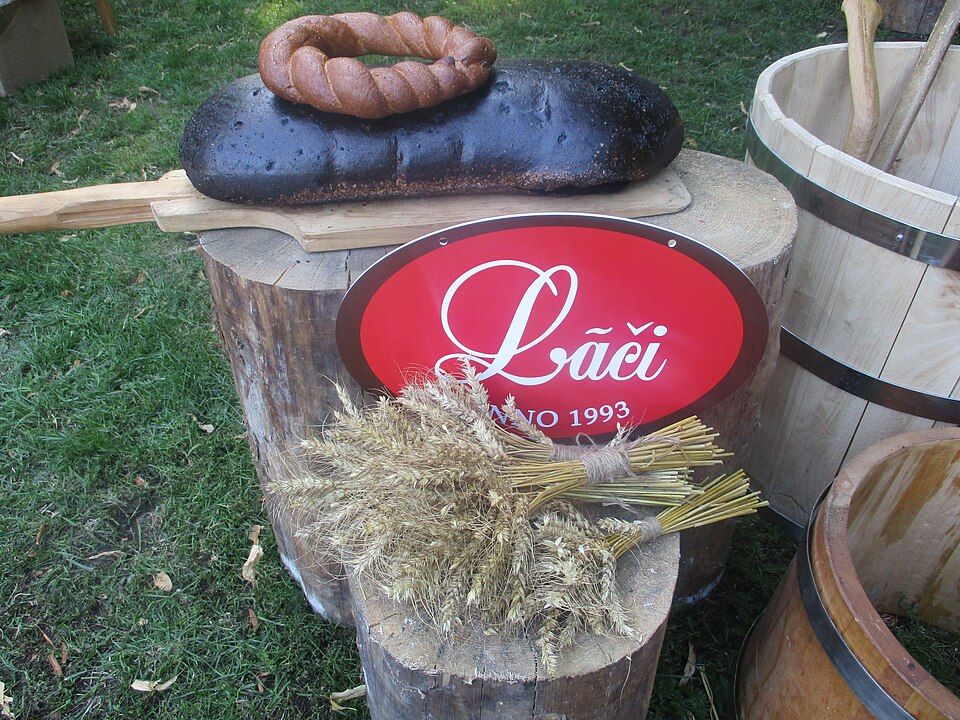
Rupjmaize — Latvia’s dark rye loaf, the bread that anchors every table in the country. Photo: Wikimedia Commons.
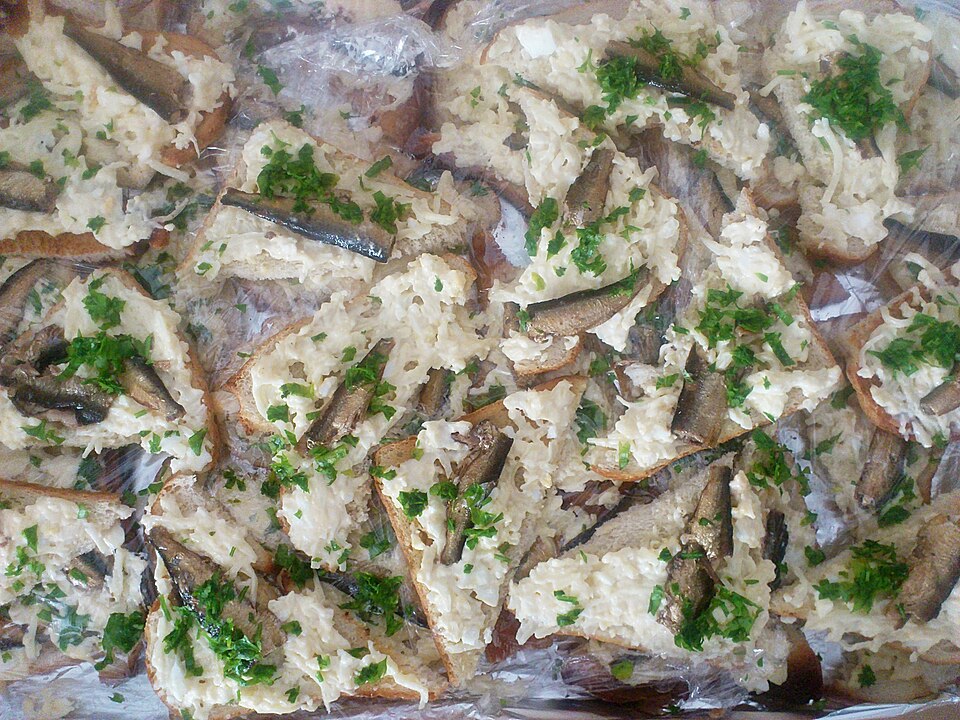
Butterbrot with smoked sprats — Riga’s Baltic sprats on rye, the market snack that never leaves the table. Photo: Wikimedia Commons.
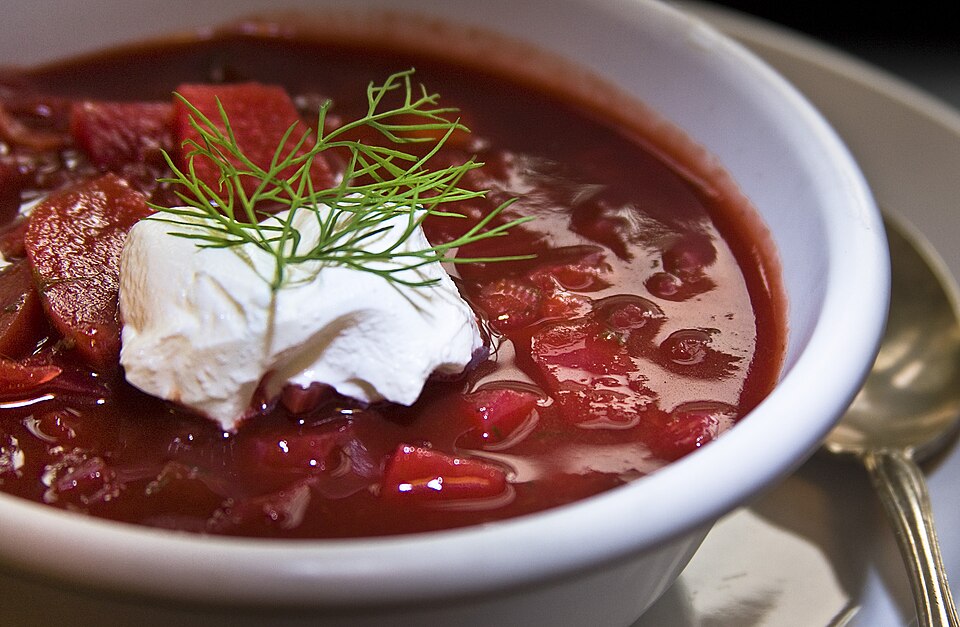
Beet soup with sour cream and dill — aukstā zupa belongs to the Baltic family of cold beet soups, Latvia’s pink summer bowl. From the World Cuisines Latvia collection.
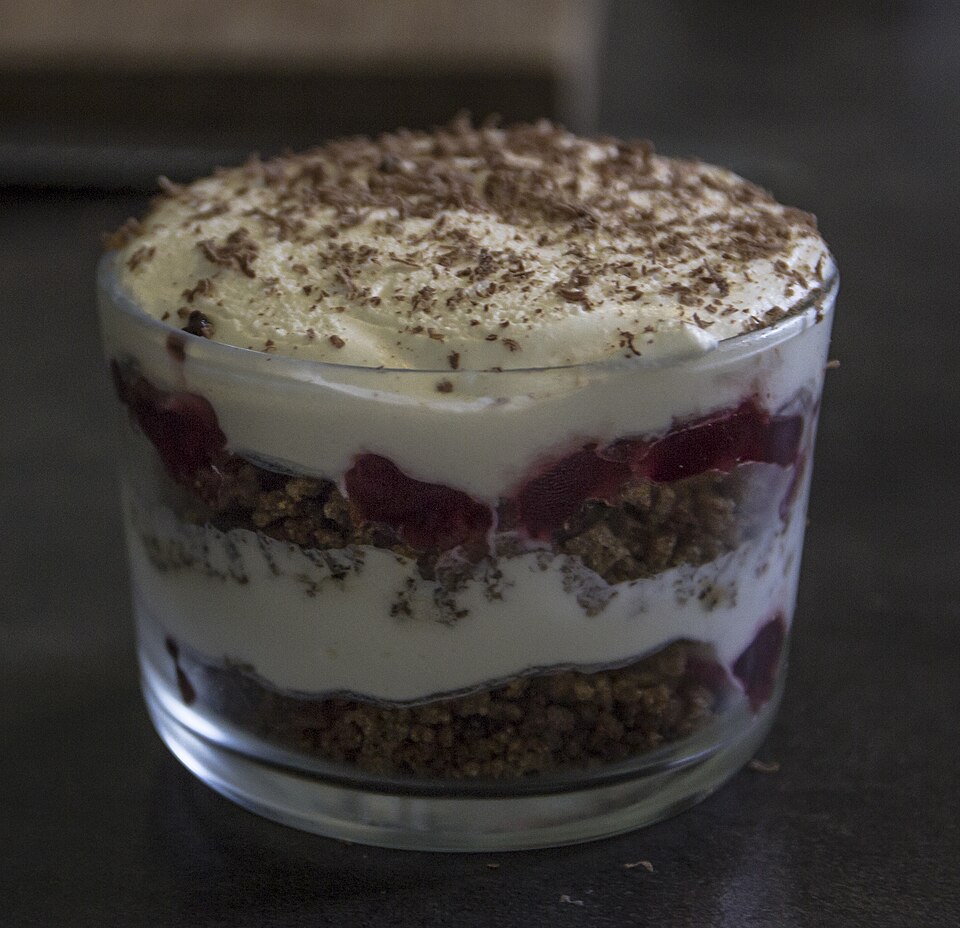
Rupjmaizes kārtojums — the rye-bread trifle, crumbs and cranberries under whipped cream. Photo: Wikimedia Commons.
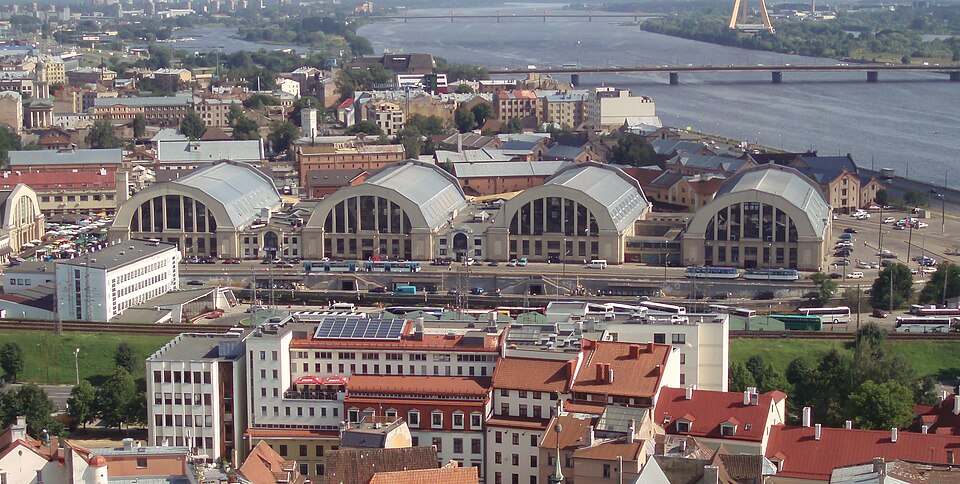
Riga Central Market — five former zeppelin hangars turned into Europe’s great food halls, where the grey peas are bought by the kilo. Photo: Wikimedia Commons.
The Latvian larder is a winter larder: peas, rye, cured pork, smoked fish. Everything on the celebration table stores, keeps, or ferments — and the feast is the proof that a cuisine built for February can still throw a party in November.
🥃 Riga Black Balsam — the black gold, older than the country
Riga Black Balsam — Rīgas Melnais balzams — is the drink of the day, and it is older than the country it toasts: a pitch-dark herbal liqueur at 45%, made from 24 botanicals — birch buds, linden blossom, wormwood, peppermint, bilberry, valerian, gentian, ginger, oak bark, black pepper, honey and more — infused and blended with honey, caramel and oak-aged brandy notes, and sold in its clay bottle ever since. The World Spirits Latvia collection gives the history in one line — created in 1752 by pharmacist Abraham Kunze — and the legend that goes with it: Catherine the Great, visiting Riga, fell ill with stomach cramps, and Kunze’s herbal elixir cured her, winning him the exclusive imperial privilege to produce it. The legend is labelled a legend — the sources agree it is lore, not record — but the dates around it are real: the first written recipe is dated 1752, the balsam was sold as “Kunze’s Riga Herbal Balsam”, and by 1789 hundreds of ceramic bottles a year were going to Russia.
The recipe survived wars and occupations the way the country did — barely, and then completely. Latvijas Balzams, the drinks company founded in 1900, produces it in Riga; the currant and cherry variants came later, and the Element variant after them. In 1939 the recipe was lost, when its keepers left with the Baltic Germans ahead of the Soviet occupation, and it reportedly took five years to recreate after the Second World War. The exact formula is still a secret, known only to the head master blender and a handful of apprentices; the production technology is not. What is known is the method: infuse the botanicals in spirit, blend with honey, juices and caramel, rest in oak, bottle in clay. The flavour is bitter herbs, honey, dark spice — and the culture is the bottle itself: a bottle of Black Balsam is Latvia’s handshake gift, bitter, dark and proud.
How to drink it is a small ritual of its own. Neat, as a digestif, in a small glass, after the peas. In coffee — the Latvian winter warmer. With blackcurrant juice, the Riga bar classic, which turns the black liqueur ruby and sweetens the bitter edge. Or in cocktails at the Black Magic bar, by the site of Kunze’s original pharmacy in the Old Town, where the apothecary’s shop once stood. The balsam is 45% and it tastes like it; the toast is small, the glass is smaller, and the second glass is for the republic.
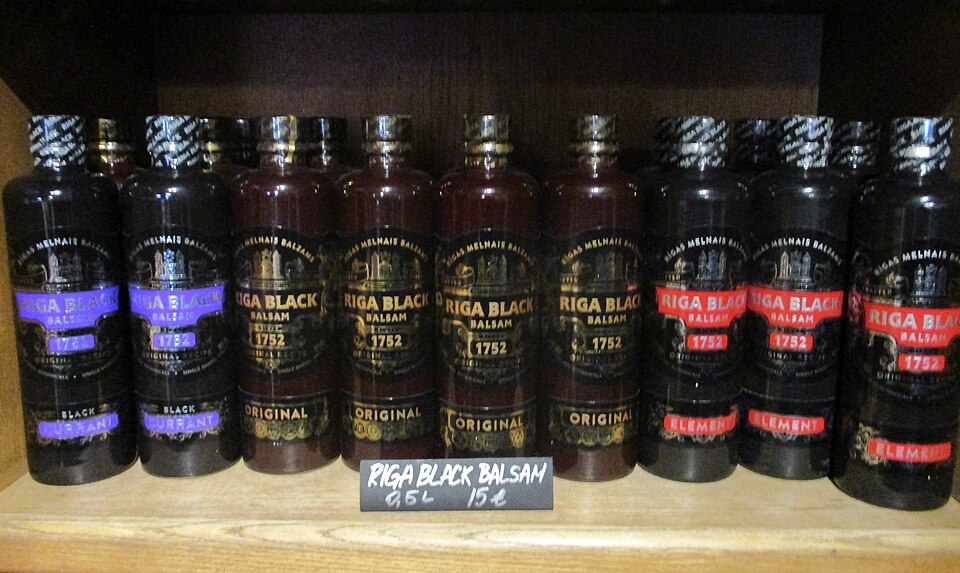
Riga Black Balsam on the shelf — Original, Currant and Element, all carrying the year 1752. From the World Spirits Latvia collection.
The balsam is older than the country by 166 years. Kunze mixed it in 1752, when Riga was a port of the Russian Empire and Latvia did not exist as a state; Latvians now toast their independence with a liqueur that predates independence itself — and that is, somehow, exactly right.
The Baltic table: Lithuania and Estonia eat beside Latvia
Latvia does not celebrate alone on the Baltic shore — its neighbours eat from the same larder, and their tables rhyme. Lithuania’s national dish is cepelinai, the zeppelins: huge airship-shaped dumplings of raw-and-cooked grated potato stuffed with curd or meat, glossed with spirgai bacon-onion sauce — named after Count Zeppelin’s airships in the early 1900s, and a Sunday labour of love. Beside them sits šaltibarščiai, the shocking-pink cold kefir-and-beet soup that is Lithuania’s most photographed bowl, and kugelis, the golden potato pudding baked with bacon and onion, and šakotis, the tree cake dripped layer by layer onto a rotating spit over open fire — in 2015 Lithuanian bakers set a world record with a 3.7-metre giant. The World Cuisines Lithuania collection holds them all, and the World Spirits Lithuania collection holds the drinks to go with them: midus, the honey mead, and krupnikas, the spiced honey liqueur.
Estonia, across the Gulf of Riga, eats from the same cold sea: verivorst, the blood sausage of the winter table; mulgipuder, the mashed potato and barley porridge; kama, the roasted-grain flour stirred into kefir; and pirukad, the filled buns that are Estonia’s answer to the pīrāgi. The World Cuisines Estonia collection holds them, and the World Spirits Estonia collection holds Vana Tallinn, the spiced liqueur of the old town. Three countries, one sea, one larder: potatoes, rye, pork, beets, kefir, smoke — and a feast that turns all of it into a celebration. The Baltic table is not three cuisines. It is one kitchen with three accents, and today Latvia is the one singing.
🇱🇻 Riga — the city that serves the table
The food is only half the day; the city is the other half. Riga is a port on the Daugava, and everything about it shows in the food: the river brought the trade, the trade brought the spices for the balsam, and the market halls by the river still sell the peas and the sprats. Walk it on 18 November and the day reads like a map. The National Theatre, where the republic was proclaimed. The Freedom Monument, where the flowers go — its pedestal carved Tēvzemei un Brīvībai, For Fatherland and Freedom, over the soldiers of the War of Independence. The Old Town spires across the river, St Peter’s and the Dome, with the Railway Bridge’s lit arches behind them. Alberta iela, where the Art Nouveau facades — and staircases — are at their most theatrical, the city holding one of the world’s great collections of the style. And the Christmas market in the Old Town square, where the great tree is lit and the stalls sell grey peas, pīrāgi and hot balsam by the cup.
The singing is the part visitors underestimate. Latvia’s Song and Dance Celebration gathers thousands of singers in folk dress — a sea of white blouses and songbooks, one of the largest amateur choirs on earth — and the singing is not entertainment, it is the country’s memory: the songs carried the language through the Soviet decades when the flag could not fly. On 18 November the choirs sing in concert halls and churches across the country, and the flag — carmine red with its narrow white band — flies over every town. It is a small country’s loudest day, and it ends, as it should, at the table: peas, buns, rye, sprats, and a small black glass raised to the republic.
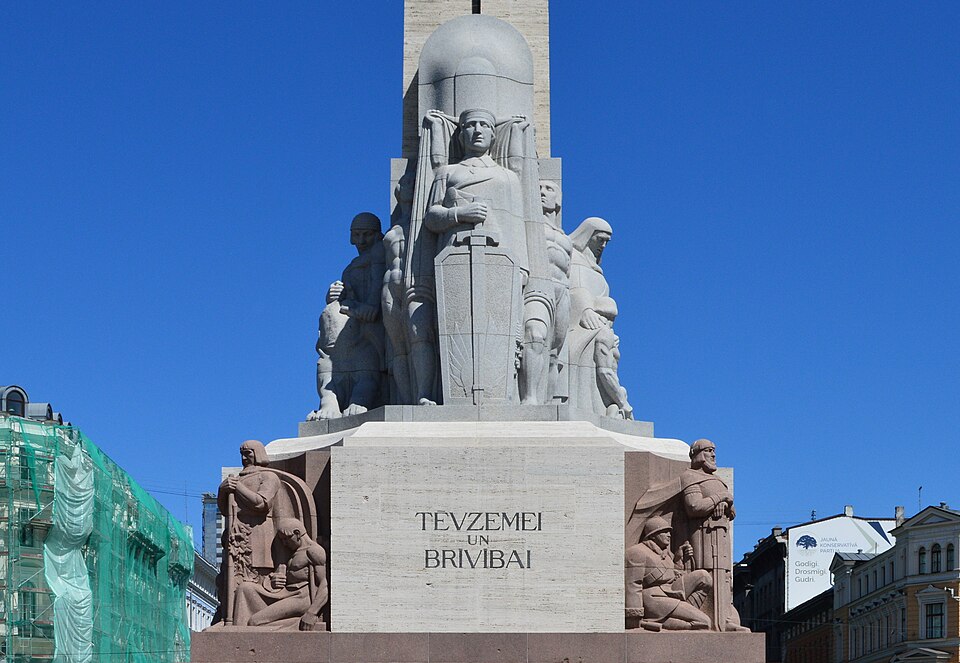
The Freedom Monument, Riga — ‘Tēvzemei un Brīvībai’, For Fatherland and Freedom, over the soldiers of the War of Independence. Photo: Wikimedia Commons.
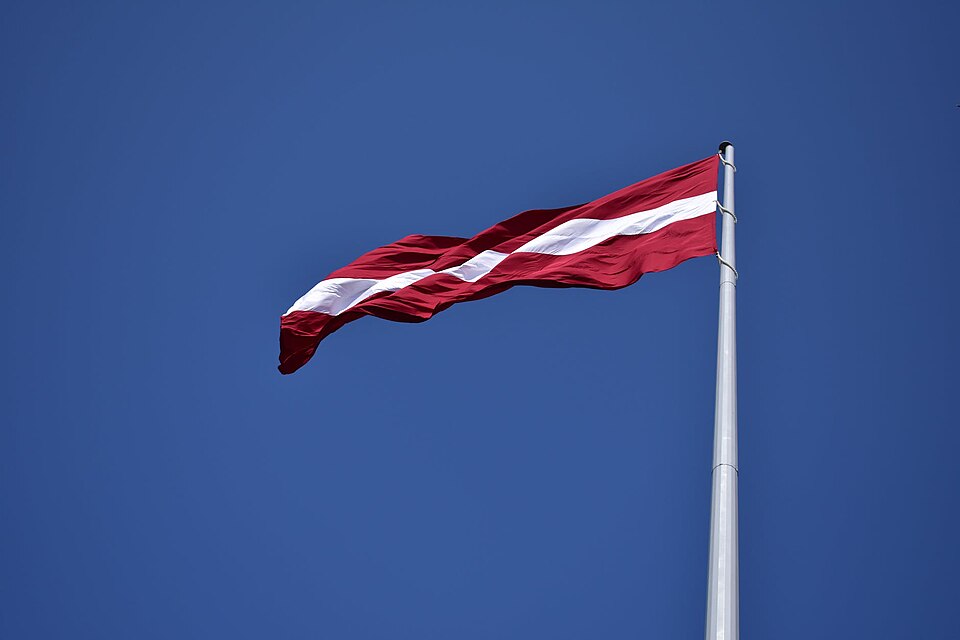
The Latvian flag — carmine red and white — flies over every town on 18 November. Photo: Wikimedia Commons.
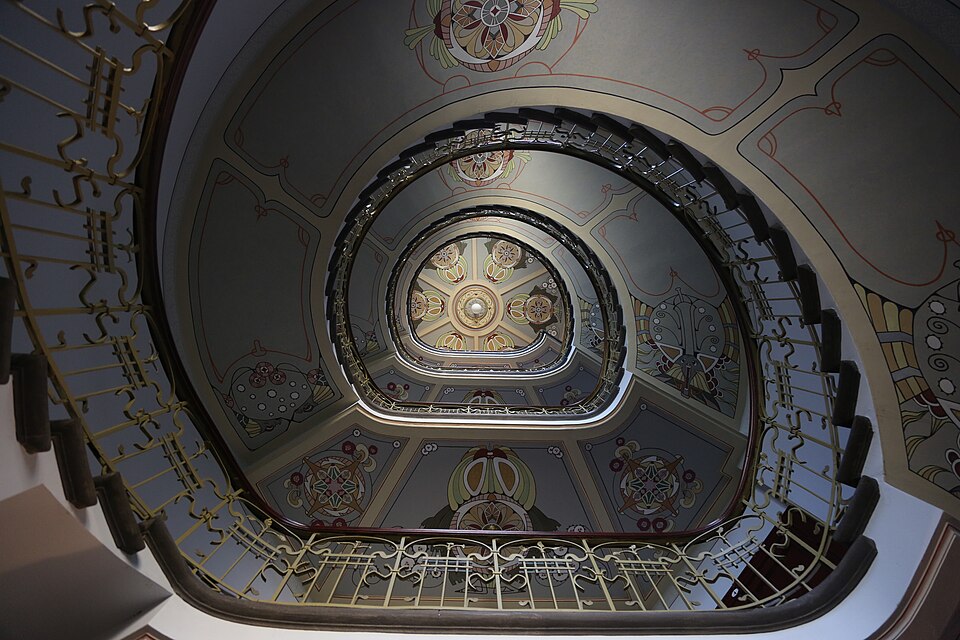
An Art Nouveau staircase on Alberta iela — Riga holds one of the world’s great collections of the style. Photo: Wikimedia Commons.
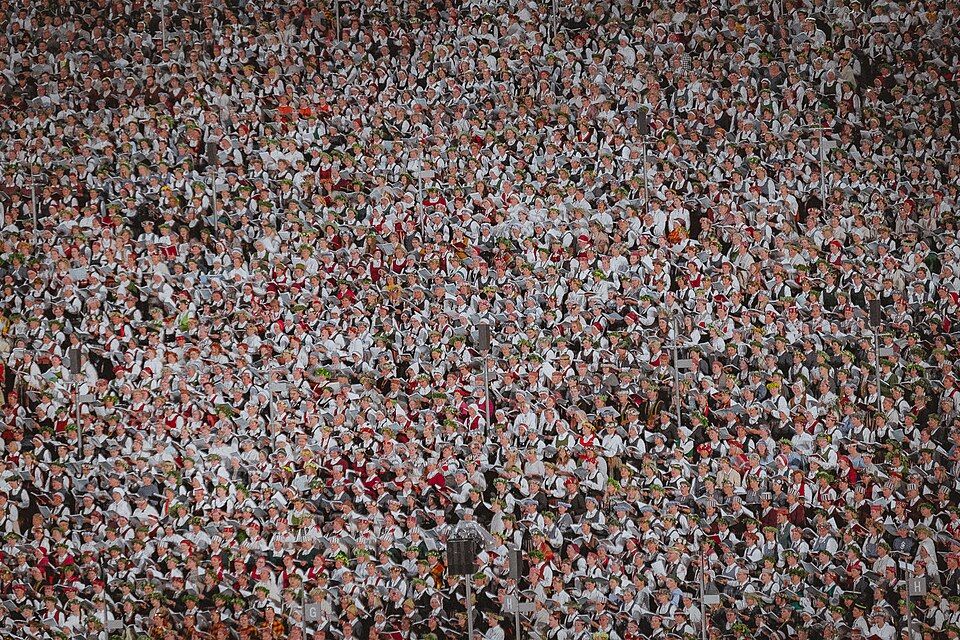
The Song and Dance Celebration, 2023 — thousands of voices in folk dress, the sound Latvia sings itself with. Photo: Wikimedia Commons.

The Railway Bridge over the Daugava at night — the river that has carried Riga’s trade, and its balsam, for centuries. Photo: Wikimedia Commons.
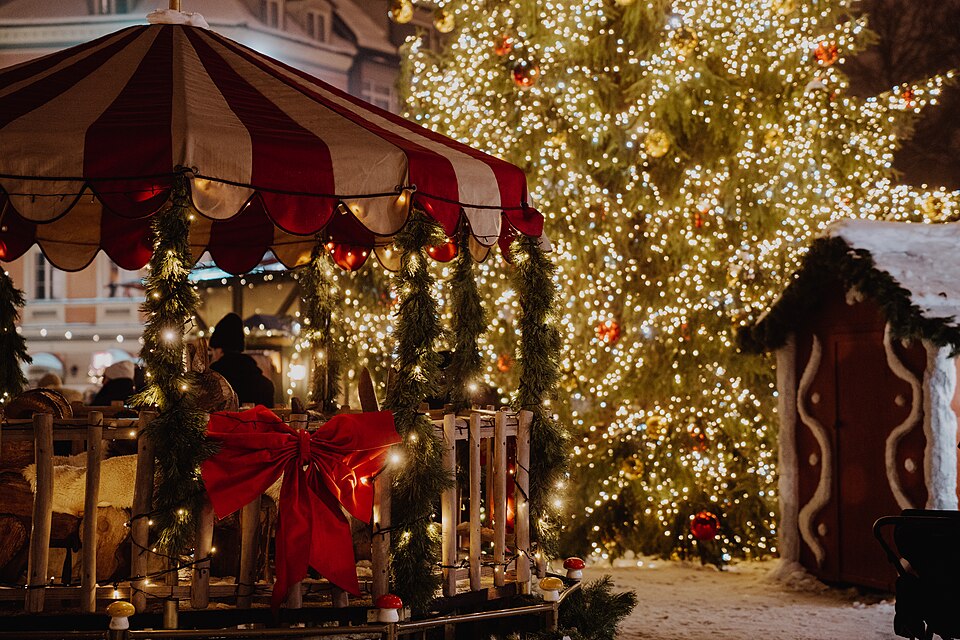
Riga’s Christmas market — grey peas, pīrāgi and hot balsam by the great tree in the Old Town. Photo: Wikimedia Commons.
The other two 18 Novembers: Morocco — and an Oman that moved its day
Three countries share 18 November, and the honest version of the story is that two of them still celebrate today — and one of them moved. Morocco’s Independence Day is 18 November, and it is a real one: it marks the return of King Mohammed V from exile and the speech he gave on 18 November 1955, two days after landing back in Morocco on 16 November, announcing the end of the protectorate and the start of freedom and independence. The legal independence came later — 2 March 1956 from France, 7 April 1956 from Spain — and Moroccans celebrated on 2 March through the 1950s, until King Hassan II, after taking the throne in 1961, moved the commemoration to 18 November in honour of his father; the same date is also the anniversary of Mohammed V becoming king, on 18 November 1927. The World Cuisines Morocco collection holds the Moroccan table for its own day — pastilla and zaalouk come later in the season, on the last night of Hanukkah — and today it is enough to say: Rabat celebrates, and the date is the speech, not the signature.
Oman is the correction. Oman’s National Day was long held on 18 November — the birthday of Sultan Qaboos — and every calendar still printed it there. But a royal decree issued on 21 January 2025 (Royal Decree 15/2025) moved National Day to 20 and 21 November, where it now marks the founding of the Al Busaidi state in 1744; the official days off in 2026 fall on 25 and 26 November. So 18 November is no longer Oman’s National Day, and this article will not pretend otherwise: the calendar’s hook was written before the decree, and the decree is the fact. No Omani dish is featured today — none is claimed, none is invented — and the Omani table will wait for its own, correct date later in the season. Getting the date right is the whole job of a holiday calendar, and a wrong date, left standing, is worse than a missing dish.
A holiday calendar is only as good as its dates. Morocco’s 18 November is the king’s speech of 1955; Oman’s 18 November ended with a royal decree in January 2025. The feast belongs to the country whose day it actually is — and today, that is Latvia.
How to eat it: the celebration table at home, and finding the table
You can cook the whole Latvian celebration in one kitchen, in one evening, with a pot, a pan and an oven. Soak the grey peas overnight — or buy them already dried from a Baltic grocer, or, failing that, use large dried field peas and accept the difference. Simmer them in fresh water until just tender, salted at the end; fry diced smoked bacon and onion until crisp and gold; fold through; serve with kefir or sour cream and thick rye bread. While the peas simmer, make the pīrāgi: an enriched dough, proofed until billowy, rolled and filled with the same fried bacon and onion, pinched into crescents, baked glossy gold — and eat them warm, by the dozen, before they cool. If you want the sweet, bake the sklandrausis: rye rounds with raised rims, carrot mashed with butter, egg and caraway, baked until bronzed, eaten cold with milk or tea. And the drink: a small glass of Riga Black Balsam, neat, after the meal — or in coffee, or with blackcurrant juice, the Riga way. Eat every pea. That is the rule, and it is also the toast.
If you would rather find the table than build it, the guides are the map. The World Cuisines Latvia collection and the World Spirits Latvia collection carry every dish and drink on this page with its ingredients, method and history; the Lithuania collection and the Estonia collection carry the neighbours. Look for the Baltic bakery, the market stall with the rye loaves, the restaurant where the grey peas are on the menu as a point of pride — and if you are in San Juan, the San Francisco restaurants guide, the New York restaurants guide, the Paris restaurants guide, the Rome restaurants guide and the Madrid restaurants guide all point at tables where the Baltic kitchen has travelled. The best test of a Latvian kitchen is the simplest: the peas should be tender, the bacon should be crisp, the buns should be warm, and the balsam should be black.
The rule of the Latvian table is the rule of the winter: nothing wasted, everybody fed, every pea eaten. The peas kept the people alive, the buns fed the weddings, the rye carried the year, and the balsam — older than the republic — is the glass raised to the fact that the people are still here to eat them.
From a Baltic table to your city’s table
Latvia’s celebration table travels well because it was built to travel: dried peas, cured pork, rye flour and a bottle are the whole technology, and every city with a Baltic bakery has a version of this evening. In Riga it is the Central Market; in Toronto and Sydney it is the diaspora kitchen where the pīrāgi are baked as a taste of home; in San Juan it is the bakery that stocks the rye. The dishes on this page are the same in all of them — grey peas with speck, pīrāgi, sklandrausis, aukstā zupa, Riga Black Balsam — and the World Cuisines guide is the way to find them, dish by dish, city by city. If you cook today, cook for someone else, too: the day’s whole point is that a republic is a shared table, and a bowl of peas eaten together is a small act of independence.
The season ahead
Tomorrow, Thursday 19 November, the table moves to France: Beaujolais Nouveau Day, the third Thursday of November, when the year’s first wine is released at one minute past midnight — coq au vin, French onion soup and champagne. After that, Mexico’s Revolution Day on Friday, and then Thanksgiving week — the season’s biggest table — with the December feasts close behind. Eight days in, the pattern is set: one day, one feast, one story, and a table that keeps getting longer. The peas are eaten, the buns are warm, the balsam is poured. Come back tomorrow hungry.
Read this story in Spanish: Día de la Independencia de Letonia: la mesa de la celebración — guisantes grises, pīrāgi y Bálsamo Negro de Riga.

Your host for the season: the Múcaro, Puerto Rico’s night owl, in CallPages acid colours. He keeps the night watch while the peas simmer.
How it works
- Every featured dish comes from the CallPages World Cuisines guide — 781 dishes with their origins, ingredients and histories — linked dish by dish below.
- Holiday dates and customs are verified against published sources for the 2026–27 season; legends are labelled as legends.
- The Holiday Table runs daily from November 11, 2026 to February 20, 2027: one feast, one culture (or several), one story per day, through Thanksgiving, the December feasts, New Year, Three Kings, Lunar New Year and Carnival.
Related reading
Innovation by Vasily Starostenko, founder of CallPages.
Create your call page
Turn your website visitors into phone conversations — set up in under two minutes.
Create your call page →