CallPages guide agents now know their whole constellation. The agent for a city guide receives a complete, budget-fitted digest of every member business — every member indexed, signature dishes or items with real prices, and drill-in facts — and is instructed never to disclaim a listed business.
A guide agent could talk in depth about a handful of members and then go blank: asked about another restaurant in its own guide, it would say it had no information — about a business listed on the very page the caller was visiting. The knowledge existed; the prompt that carried it truncated silently, and whole members fell off the end.
The concierge who forgot half the city
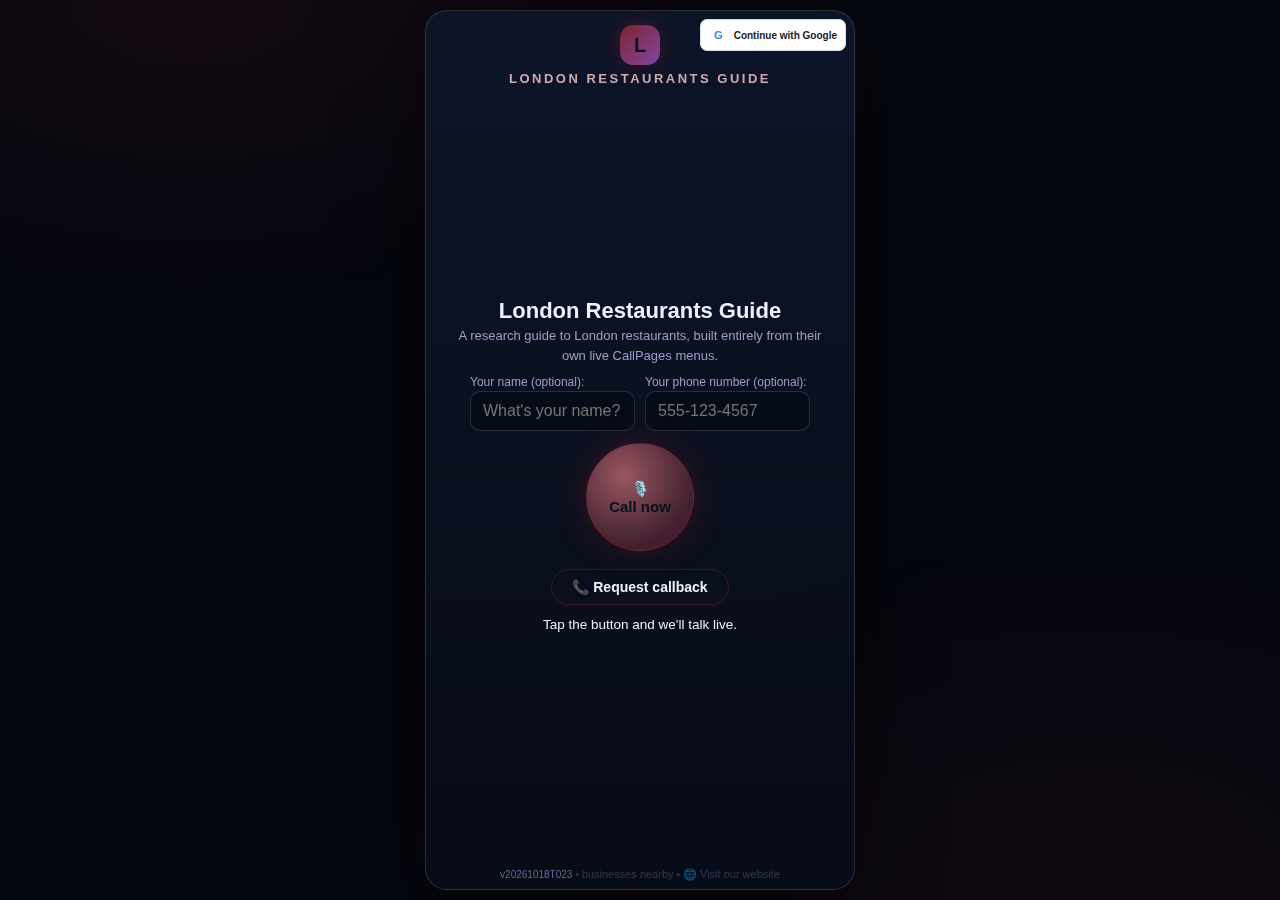
A guide's promise is scope: ask me about the city. An agent that knows thirty restaurants deeply and three hundred not at all breaks that promise in the most embarrassing way — by disclaiming businesses its own guide publishes. The fix is not a bigger prompt; it is a fairer one. The new digest spends its budget in strict order: first, proof that every member exists; then, each member's signatures; then, the details.
Fairness as an engineering rule
Round-robin sounds like a small choice. It is the whole design. Signature dishes are dealt one per member per round, so a guide with 300 members gives everyone their best dish before anyone gets a second. Facts follow the same rule. The roster's completeness is never traded for one member's depth — the agent can always answer "who serves X near Y?" across the whole city, and can always discuss any member the caller names.
Words that fit the guide
The same release taught guides to name themselves honestly. A pure restaurant guide is a restaurant guide. A directory of mixed local businesses — a ferretería next to a law office next to a bakery — is introduced as local businesses and services, in the prompt, on the pages, and in the indexes. The vocabulary is inferred from the members' own catalogs, so a guide is always described as what it actually is.
How it works
- Every member gets an index line — name, page address, area, cuisine or category, catalog size, price band — and the index is compacted step by step until ALL members fit. Completeness of the roster comes first.
- Signature items are then dealt round-robin across all members, so depth is shared fairly instead of the first few members eating the whole budget.
- Drill-in facts (a member's own description line, address, hours, phone) fill the remaining budget, again across everyone.
- A never-disclaim rule binds it together: the agent must never say it doesn't know a listed business. If one specific detail isn't in the digest, it says that detail isn't published and points the caller to the member's own page — it never disclaims the business itself.
- Vocabulary follows the guide's real topic: a restaurant guide speaks of restaurants and menus; a mixed local directory speaks of businesses and services — inferred from the members' own data, and a general directory is never forced into restaurant words.
See it live: Mi Junta
Mi Junta — CallPage · Mi Junta — website
Related reading
 Android v1.5.1: a front screen that earns its place
 No product left imageless: the nightly image sweep
 Every call attempt now leaves a diagnosis
Innovation by Vasily Starostenko, founder of CallPages.