CallPages now writes each product's questions from that product itself — its name, photo, and description. A consulting session gets questions about scope and booking; a bed frame gets questions about assembly, tools, and weight — never each other's.
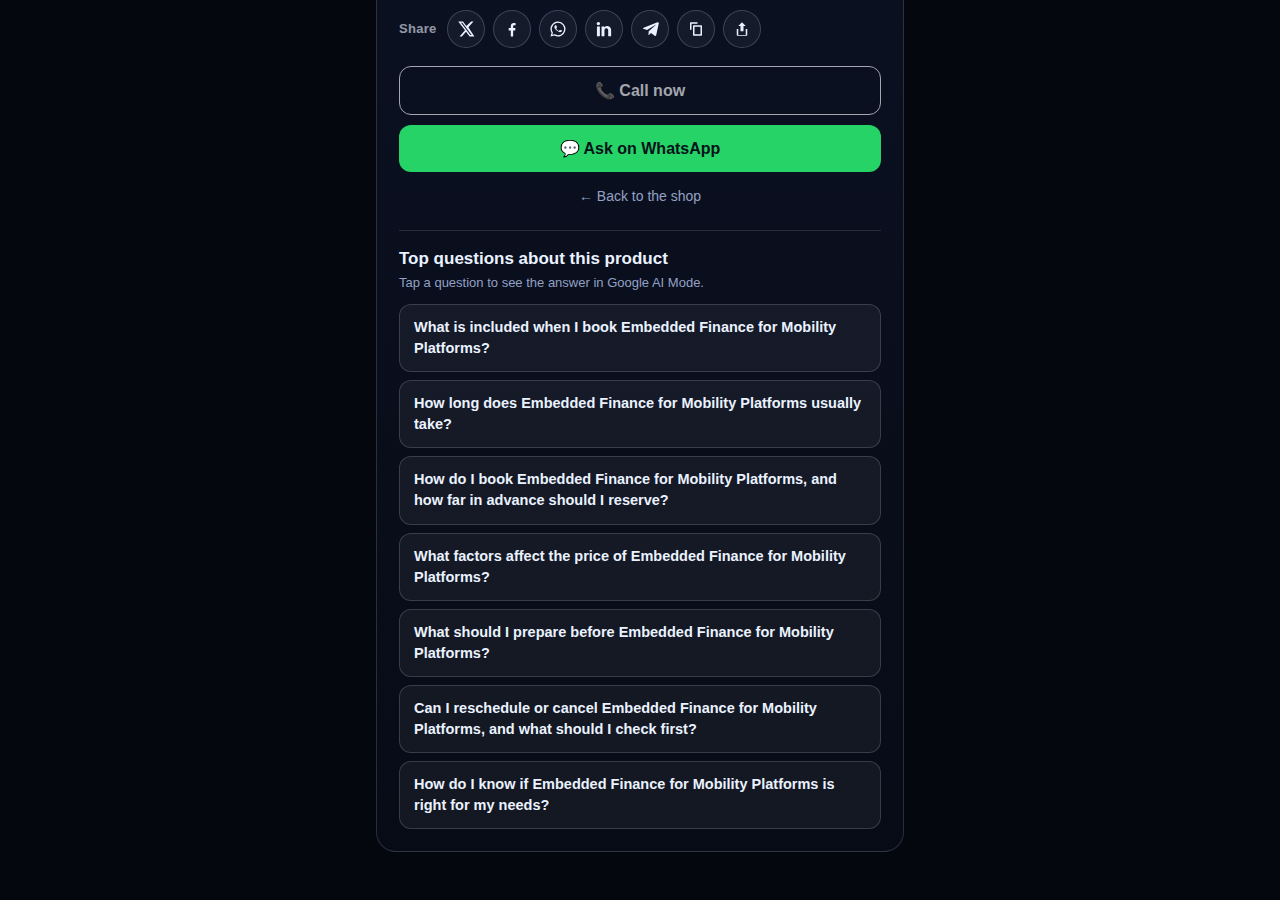
The first version of product questions matched keywords against everything pooled together — name, category, and description in one haystack. The result was embarrassing: a consulting session about embedded finance showed bed-frame assembly questions, mattresses inherited frame-only questions, and a radio got no questions about who it suits. Customers could see the questions were not really about the product in front of them.
The right questions are a form of respect
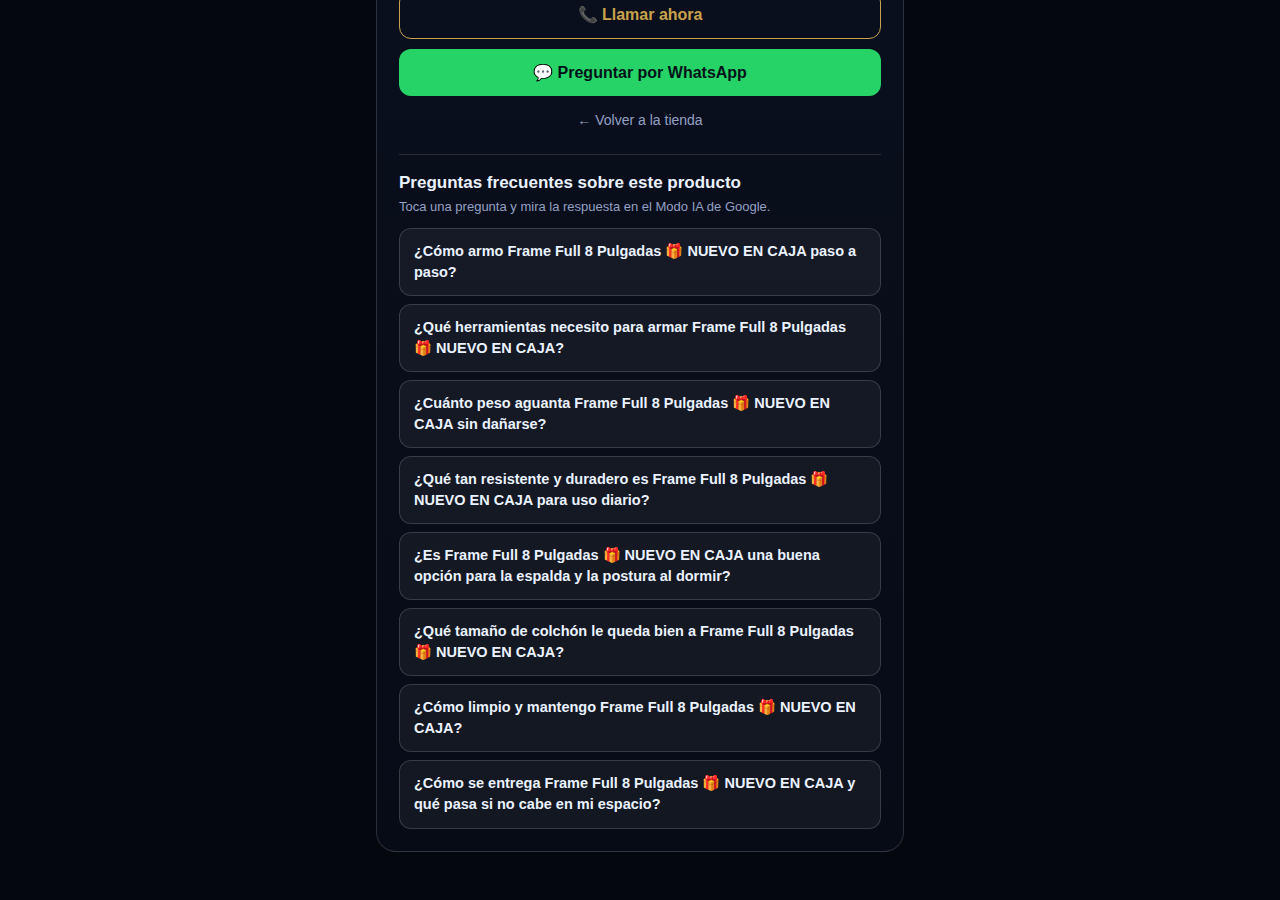
A product page that asks the wrong questions tells the customer nobody was paying attention. A consulting session is not assembled with an Allen key; a mattress is not booked three weeks out. When the questions match the product, visitors get answers to what they were actually wondering — and the business looks like it knows its own catalog.
Derived, not templated
There is no master list of questions with the product name pasted in. The question set is computed from the product's own signals, which is why a service and a frame diverge completely while two frames still differ in their details — height, material, headboard — exactly the way a good salesperson would adjust.
How it works
- Each product's questions are derived from that product alone: what it is called, what it looks like, and what its own description says — never from a pool shared with the rest of the catalog.
- The kind of product decides the kind of question: services are asked about scope, timing, booking, and price factors; physical products are asked about assembly, tools, capacity, durability, sizes, care, and delivery.
- The fix is proven per product, not in aggregate: the release tests run a consulting service, a mattress, and a non-frame product side by side and require zero cross-contamination.
- In production, the consulting product that once showed assembly questions now asks what is included, how long it takes, and how far ahead to book — and the frame next door asks how to assemble it.
See it live: Mi Junta
Mi Junta — CallPage · Mi Junta — website
Related reading
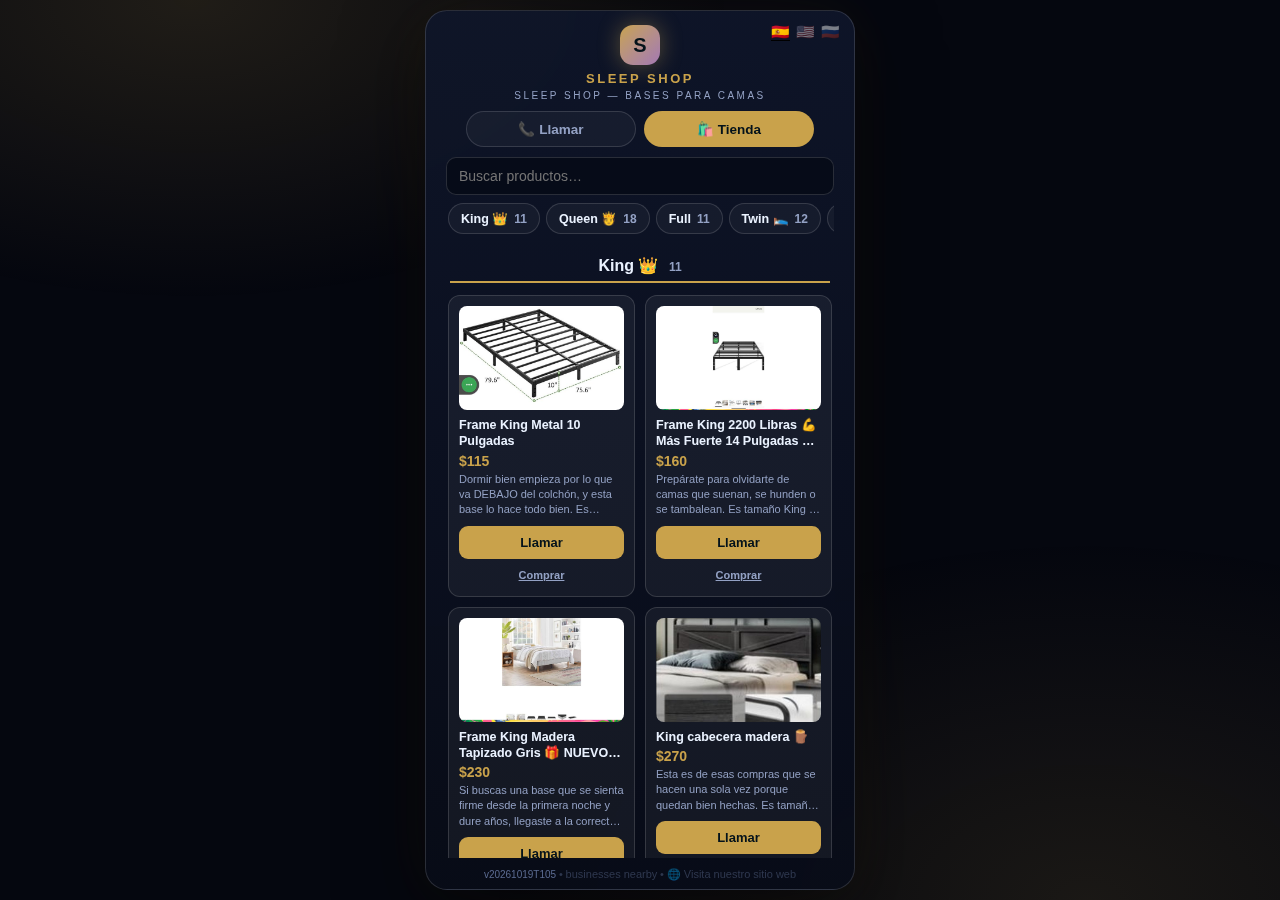 Every collection, one tap away
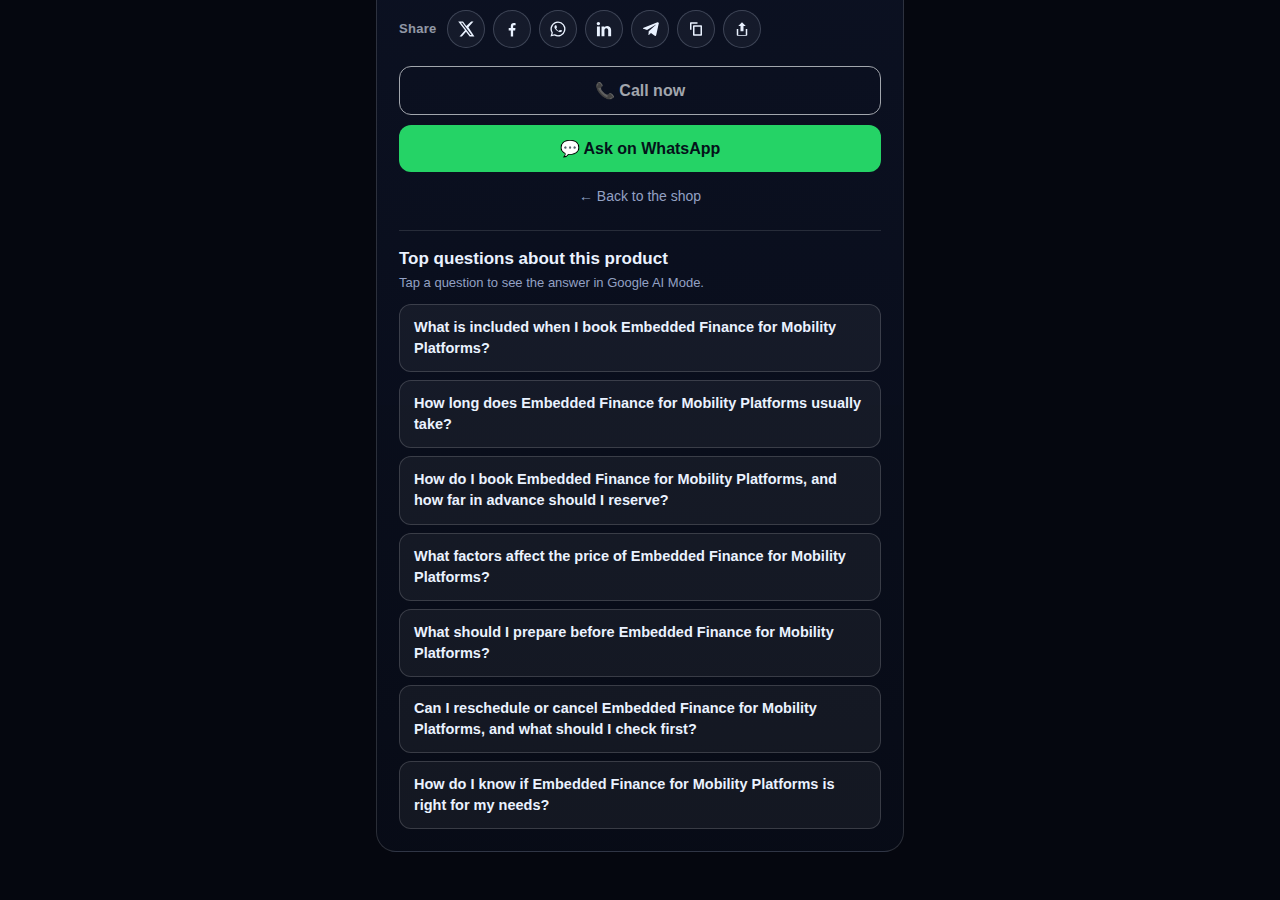 Every page and product, ready to share
 One console for every account
See questions written for one product →
Innovation by Vasily Starostenko, founder of CallPages.