
November 11 is St. Martin's Day — Martinmas — the medieval feast that marked the start of winter and the last celebration before the Advent fast. Across Germany, Austria, Slovakia, Czechia, Croatia and Slovenia the day belongs to roast goose and the first wine of the year; in Poznań it is St. Martin's croissant day, and across Poland it is Independence Day.
Holiday food content usually starts at Christmas and stays in one country. The season actually opens weeks earlier, and every culture at the table has its own opening feast — most of them invisible outside their home region.
# St. Martin's Day: the goose feast that opens the holiday season
The holiday season does not start with Christmas. It starts today — November 11, St. Martin's Day — with lanterns in the street, goose in the oven and the first glass of the year's new wine.
This is not a minor saints' day that food writers invented last year. For a thousand years, Martinmas was one of the great hinges of the European year: the harvest was in, the wine was ready to judge, the animals that could not be fed through winter were slaughtered, rents and wages fell due, and the whole continent sat down to the richest table of the autumn — because from the next morning, the Advent fast began. Feast today, fast tomorrow: that deadline is exactly why the food got so good.
This article opens The Holiday Table: from today until February 20, we publish one feast a day — the dish, the drink, the culture and the history — drawn from our World Cuisines guide (781 dishes) and World Spirits guide (266 drinks). Day one belongs to Central Europe, where St. Martin's Day is still a living feast — and it starts, as the feast itself does, with the bird.
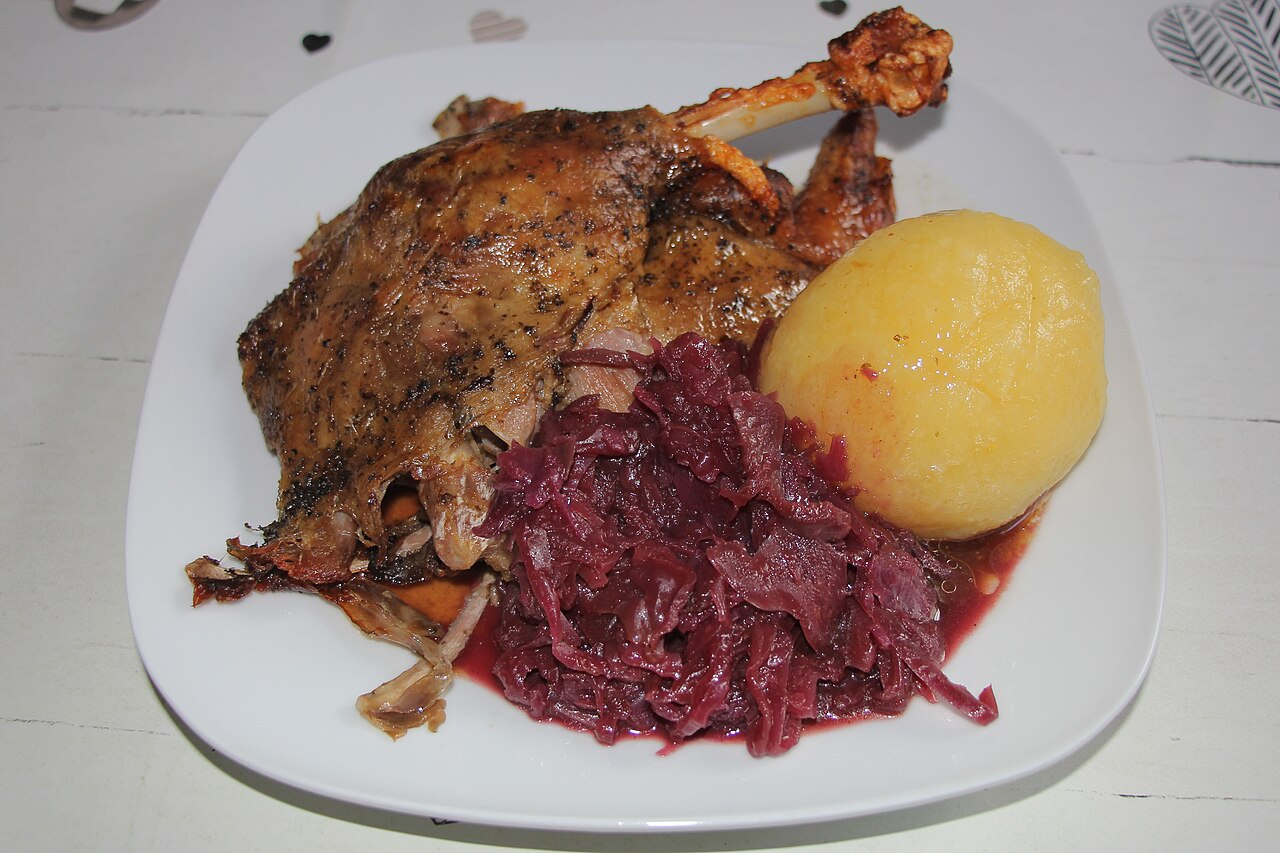
The Martinsgans plate: roast goose, apple-red cabbage and a dumpling the size of a fist. Photo: Wikimedia Commons.
The saint, the cloak and the goose that betrayed him
Martin of Tours was a Roman cavalry officer before he was a saint, and the scene that made him famous is a piece of pure theatre. At the gate of Amiens, on a freezing day in the fourth century, the young soldier met a beggar shivering in rags — and, having nothing else to give, drew his sword, cut his own military cloak in two and handed half to the stranger. That night, the story goes, he dreamed of Christ wearing the half-cloak. It became one of the most painted scenes in European art: here it is in gold and tempera by Ambrogio Lorenzetti, painted around 1342–44 and now at Yale.
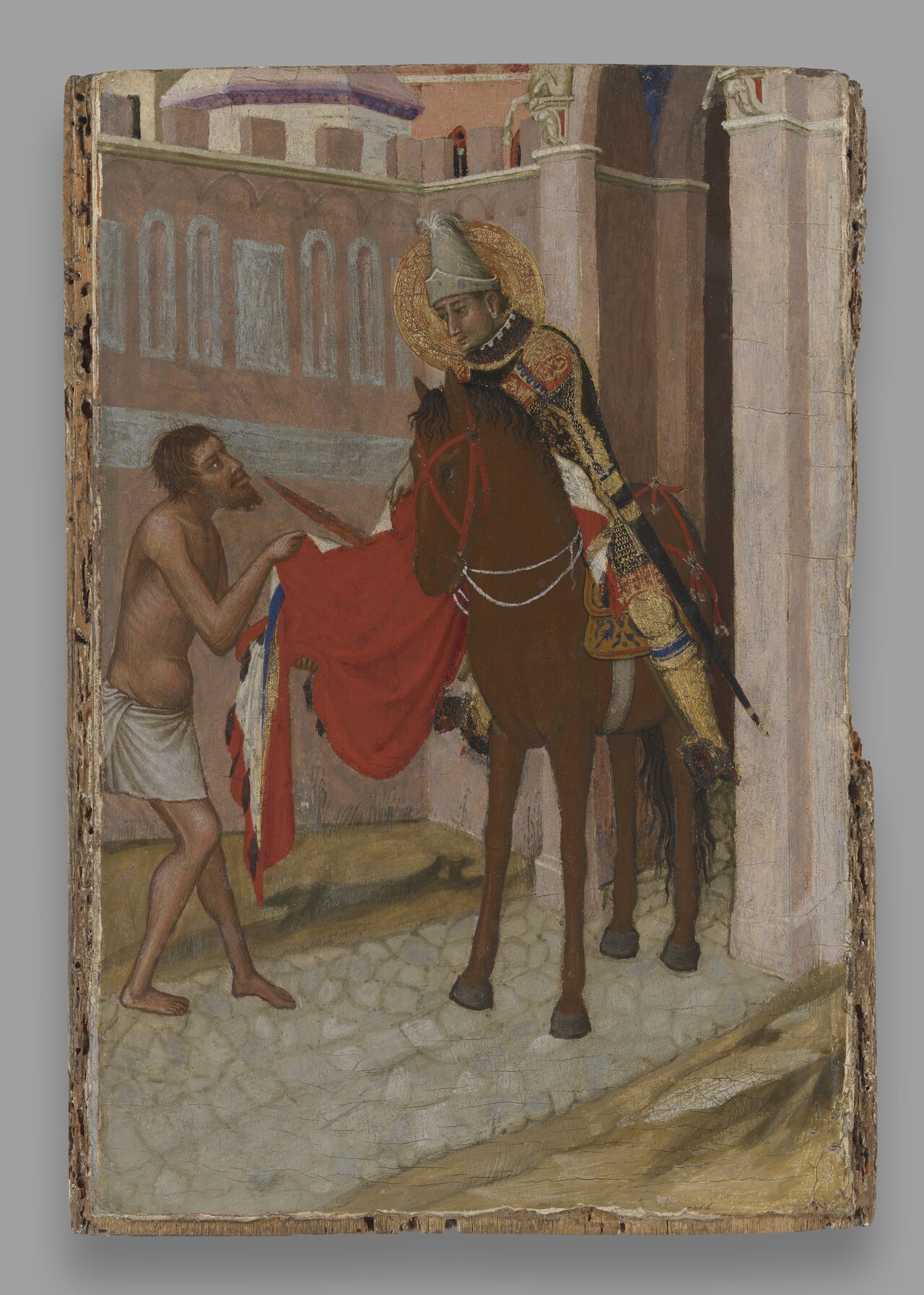
St. Martin divides his cloak for a beggar at the gate of Amiens — Ambrogio Lorenzetti, c. 1342–44 (Yale University Art Gallery). The act of sharing that built a feast.
The goose arrived later, and by farce. Legend — and it is labelled legend wherever it is told honestly — says that Martin, fleeing the honour of being made Bishop of Tours, hid in a goose pen, and the geese cackled so loudly that the searchers found him. Europe has eaten goose on November 11 ever since, which tells you everything about whose side of the story Europe took. But the bird was on the table for practical reasons too: geese fattened all summer on stubble fields were at their peak in November, too expensive to feed through winter, and big enough to anchor a feast. The legend just gave the menu a saint.
Around the saint, the day organised the whole economy of autumn. Martinmas was the traditional day to settle farm rents and servants' wages, to hire for the coming year, to slaughter the Martinmas livestock and to taste — critically, ritually — whether the new wine had turned. In the old church calendar, the fast that followed was serious enough to earn its own name: St. Martin's Lent, the forty days of restraint that began the morning after the goose. The feast was engineered, in other words, to be worth fasting after.
A feast with a deadline. Martinmas was the last loaded table before forty days of Advent fasting — and a deadline, in any kitchen, is the mother of great cooking.
The St. Martin's table, at a glance
Four countries keep the feast at full strength today. Here is the whole table on one card — every plate below gets its full story in the chapters that follow, and every dish links straight into the guides.
- Lokše wrapped around roast goose — Slovakia — Goose fat, braised red cabbage, the season's first young wine — Slovakia collection
- Sauerbraten — Germany — Red cabbage, potato dumplings, a gravy thickened with gingerbread crumbs — Germany collection
- Bigos, the hunter's stew — Poland — Dark rye bread — and a second helping on day two, when it is better — Poland collection
- Rogal świętomarciński, the protected croissant — Poland — A parade down St. Martin Street, Poznań — and coffee strong enough to stand a spoon in — Poland collection
- Martinigansl, then Apfelstrudel — Austria — Grüner Veltliner, blessed in the cellars this week — Austria collection · World Spirits Austria
🇸🇰 Slovakia: the goose feasts and the flatbread that wraps them
Nowhere is the day more delicious than the villages west of Bratislava, where the autumn goose feasts — husacie hody — fill whole weekends and whole village halls. The village of Slovenský Grob is the capital of the cult: families book tables weeks ahead, the geese come out of the ovens in relays, and the plate is always built to the same architecture — roast goose, braised red cabbage, and lokše.
Lokše are thin potato flatbreads, rolled from boiled-potato dough and baked on a dry hot plate until they spot and blister, then brushed generously with goose fat while still warm. Rolled around slices of roast goose and a tangle of cabbage, they are the feast's edible wrapping — tender, potato-sweet, and rich enough to make you understand why the goose needed a vegetable with this much character. Nothing about lokše is decorative: the flatbread soaks up the roasting juices that bread or dumplings would miss, and the goose fat that would otherwise be discarded becomes the seasoning. It is peasant engineering at its most delicious — every part of the bird, working.
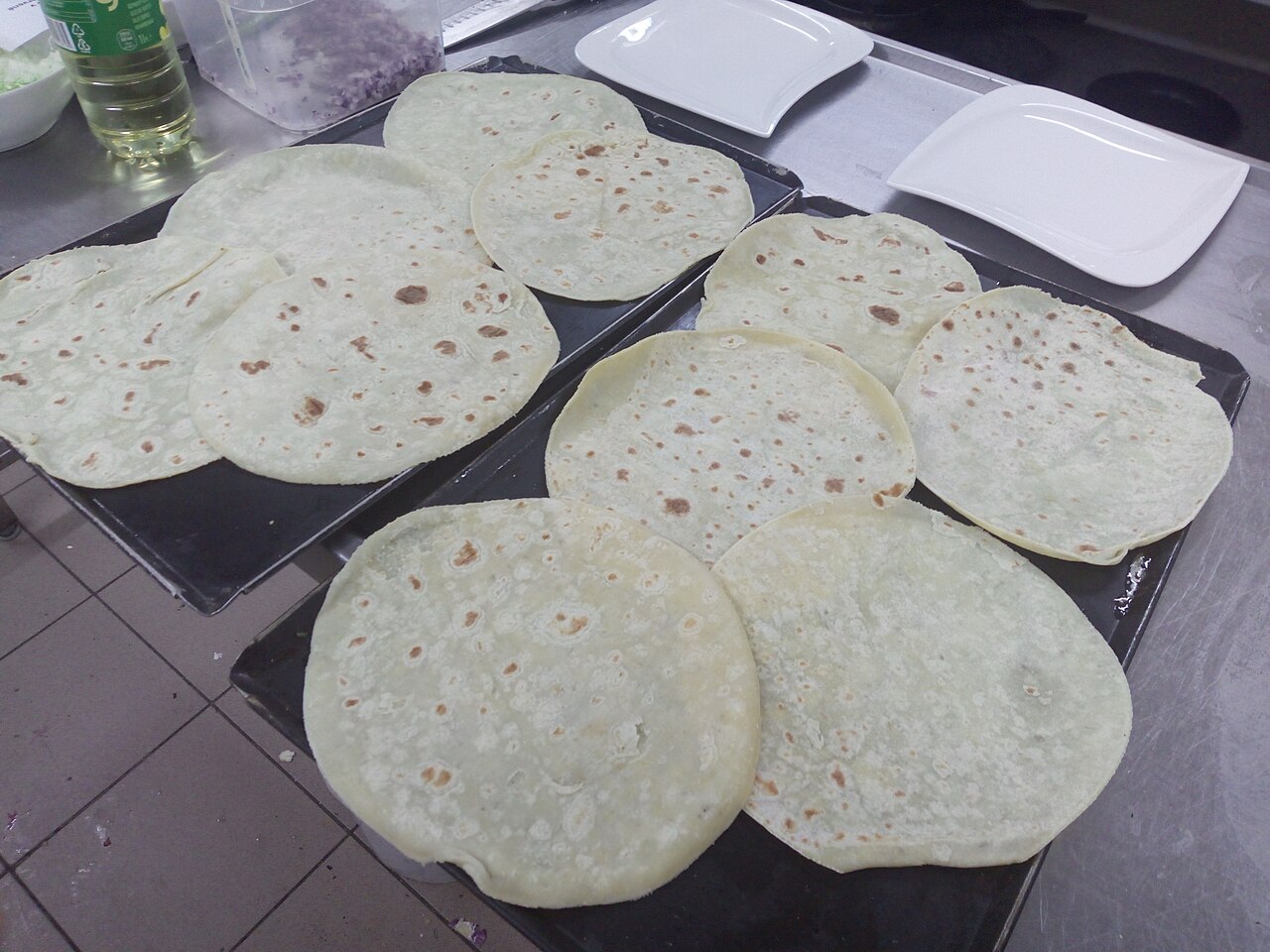
Lokše — the potato flatbreads brushed with goose fat that wrap the roast goose at Slovakia's St. Martin's feasts. From the World Cuisines Slovakia collection.
Lokše lead a double life. Savoury, they carry goose, duck or liver; sweet, they are spread with plum jam or ground poppy seeds and rolled into tubes — the same dough, blessing both ends of the meal. And they do not travel alone in the Slovakia collection. Beside them sit bryndzové halušky, the national dish itself: tiny hand-pushed potato dumplings tossed until glossy in bryndza, the sharp, salty sheep cheese of the Slovak mountains, and crowned with crackling bits of fried bacon and their fat. Where lokše are the feast's wrapping, halušky are its comfort — the dish Slovaks abroad dream about first.
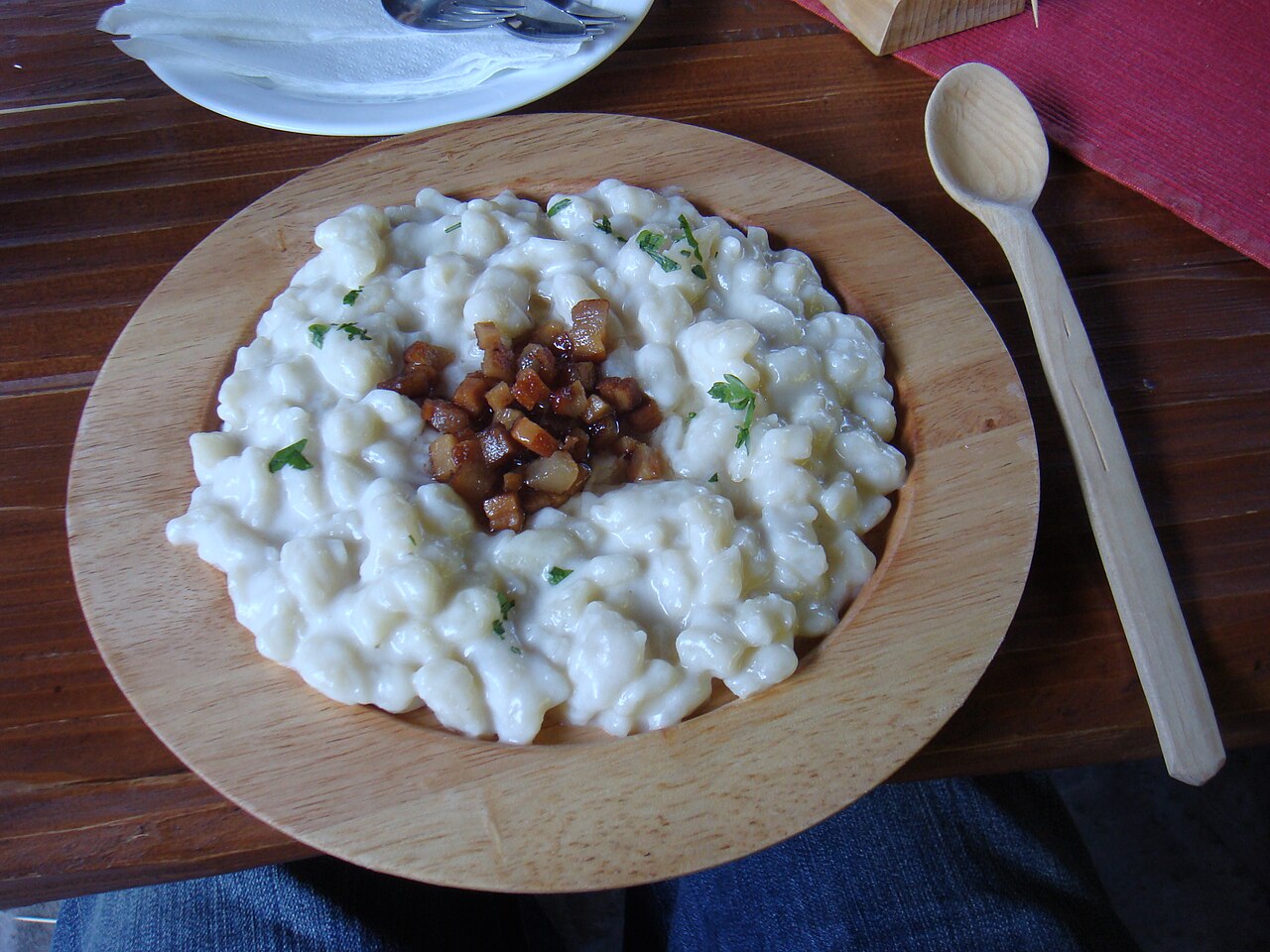
Bryndzové halušky — Slovakia's national dish, crowned with fried bacon. From the World Cuisines Slovakia collection.
The third plate on the Slovak winter table is the bridge to Christmas: kapustnica, the celebration soup of sauerkraut simmered with dried wild mushrooms, smoked meat, prunes and paprika until it turns deep, sour and almost sweet. Kapustnica is the soup Slovakia eats on Christmas Eve — which means the goose feasts of November are also a rehearsal: the same cabbage, the same smoke, the same patience, warming up for December. Round the table out with pagáče, the flaky crackling scones served warm with soups and wine at every village celebration, and you have the full Slovak opening act of the season.
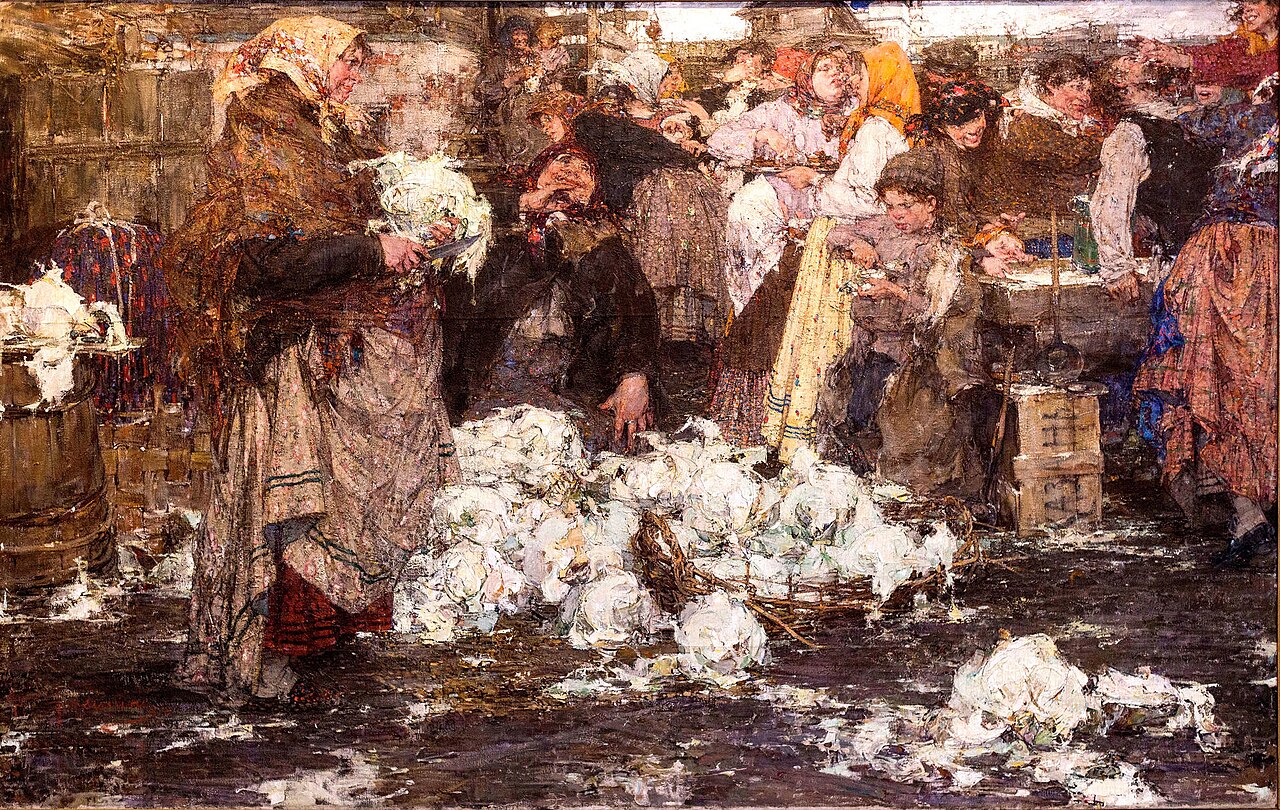
Kapustnica — the deep, sour celebration soup that returns on the Slovak Christmas Eve table. From the World Cuisines Slovakia collection.
Eat it like a Slovak: goose first, lokše wrapped around it while both are hot; halušky on the side, never as an afterthought; kapustnica to open the next feast; and something sweet — a plum-jam lokša — to close.
🇩🇪 Germany: lanterns first, then the great roast
In Germany, St. Martin's Day begins at dusk and belongs, at first, to the children. As darkness falls they pour into the streets carrying paper lanterns — suns, moons, stars, every shape a classroom can fold — in the Martinsumzug, the lantern procession, singing the old lantern songs behind a rider on a white horse dressed as St. Martin in a Roman cloak. In the Rhineland the figure is enormous and the processions fill whole town centres; everywhere, there are sweet bread men — Weckmänner — waiting at the end of the route, and very often a bonfire: the Martinsfeuer, the first big fire of the dark season.
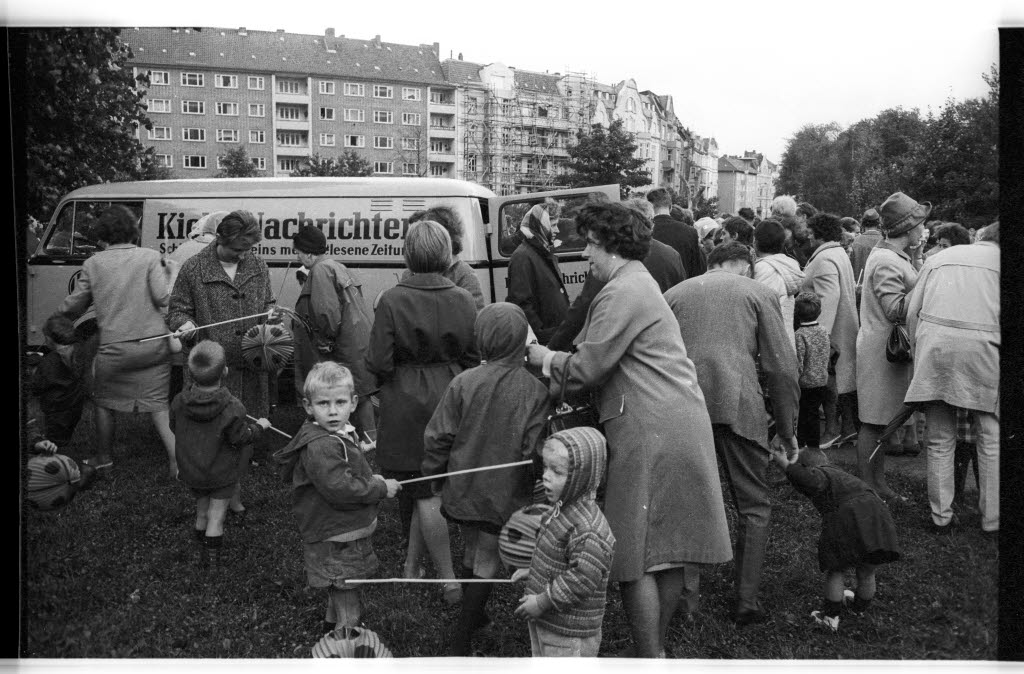
The lantern procession: children gather with paper lanterns for the Martinsumzug (Kiel, archival photograph, Wikimedia Commons).
Then the adults take the evening back. The Martinsgans — the St. Martin's goose — comes to the table with the same supporting cast from Aachen to Görlitz: apple-stuffed, roasted until the skin turns to amber glass, and served with red cabbage and dumplings, potato or bread, under a gravy made from its own roasting juices. It is the first roast of the cold season and German inns build whole November menus around it; families who roast one bird a year roast this one.
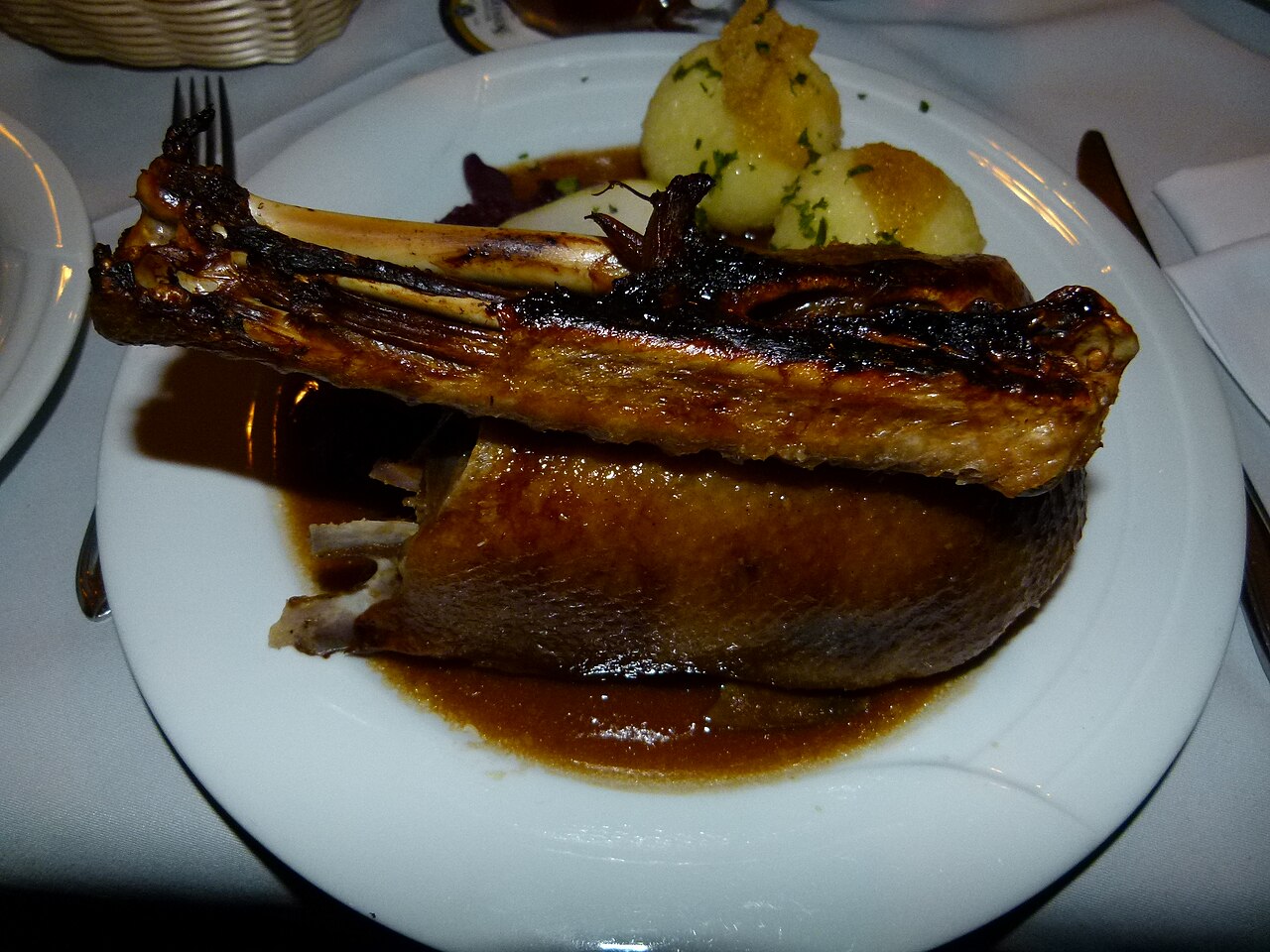
Martinsgans as the inns serve it — a goose portion with Thuringian dumplings. Photo: Wikimedia Commons.
The Germany collection holds the other great roast of the German festive season, built on exactly the same plate — and it is the dish to cook when a goose is beyond reach: Sauerbraten. This is slow food from before slow food had a name. Beef rests for three to seven days in a marinade of vinegar, red wine, onions and spices — in the Rhineland, classically sweetened with raisins and crumbled Printen gingerbread — until the acid has tenderised it to silk; then it braises for hours and is served in its own glossy sweet-sour gravy, sliced over red cabbage and potato dumplings. Our guide calls it, simply, "winter on a plate": tangy, dark and gently sweet, the kind of dish that only exists because a feast day demanded the best a kitchen could do.
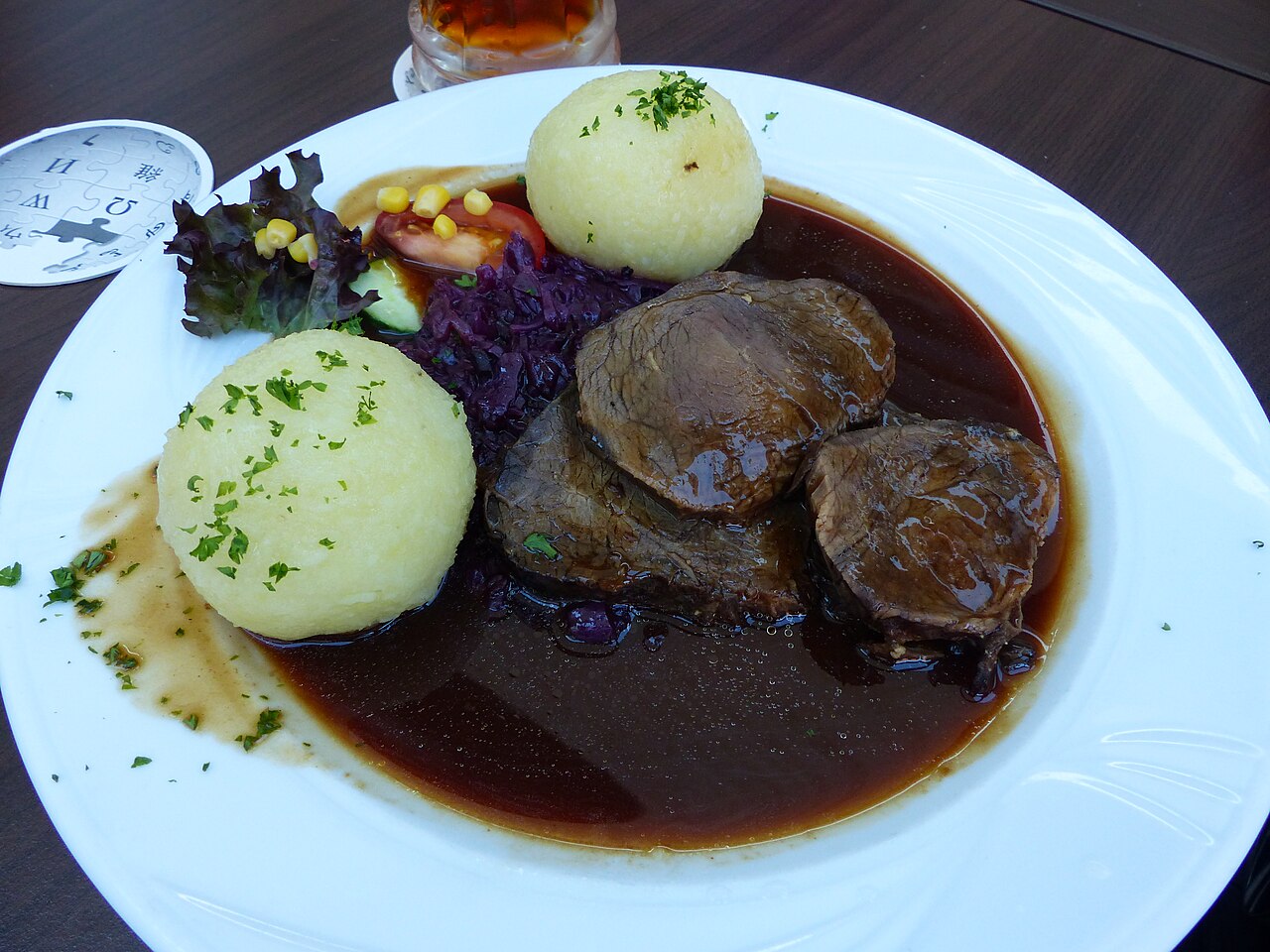
Sauerbraten — beef marinated for days and braised in a gingerbread-crumb gravy, served over red cabbage and dumplings. From the World Cuisines Germany collection.
And because no German feast lives only at the table, the collection keeps the street side of the season too. The pretzel — the Brezel, knotted, lye-dipped to a deep mahogany shine and snowed with coarse salt — is the bread of every market stall and beer hall from Munich to Hamburg. The bratwurst grills at every Christmas-market gate in the land. And Berlin contributes the currywurst: a steamed-then-fried sausage drowned in curry-spiced ketchup with fries under mayonnaise — a post-war invention that became a national monument, proof that the German feast tradition is still being written, one paper tray at a time.
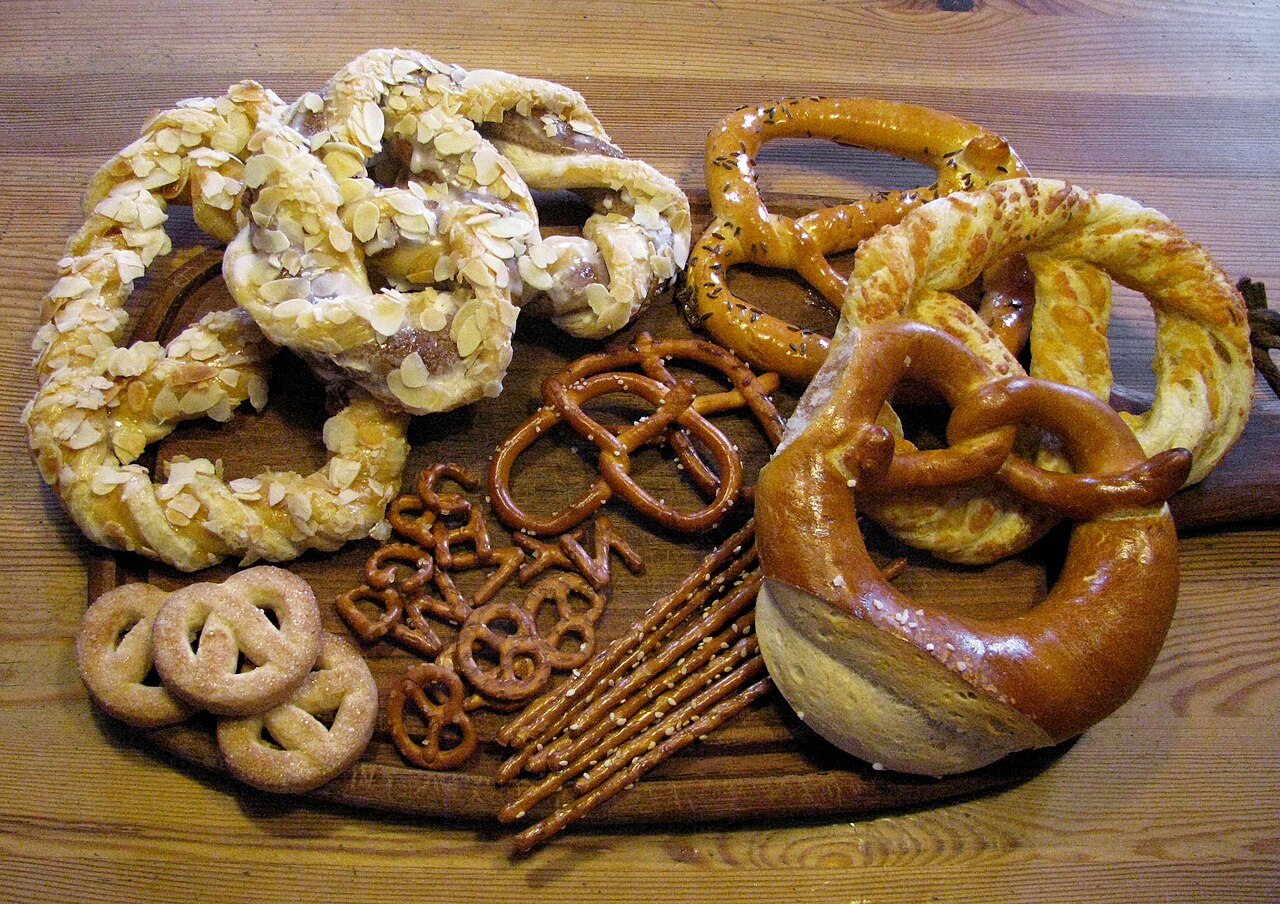
The Brezel — the knotted icon of German baking, mahogany crust and coarse salt. From the World Cuisines Germany collection.
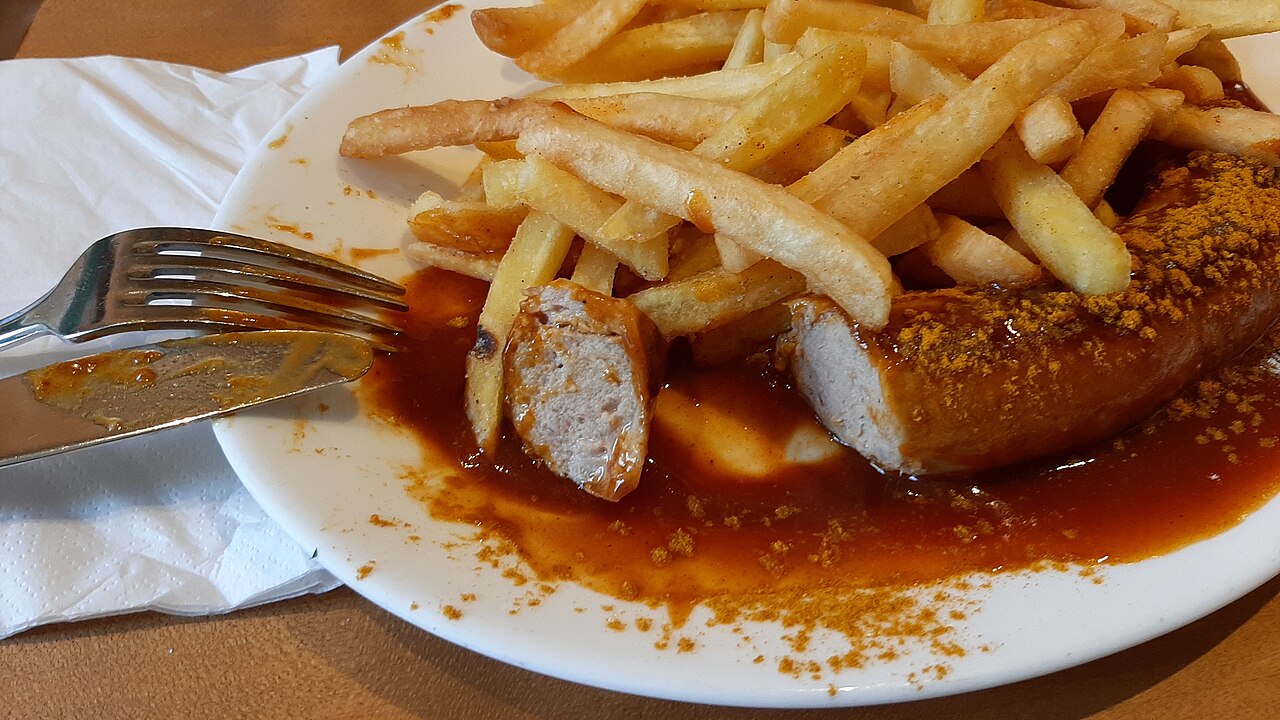
Currywurst — Berlin's post-war icon, curry ketchup over a fried sausage with fries. From the World Cuisines Germany collection.
Lanterns, then gravy. Germany splits the feast in two shifts — the children take the streets at dusk, the goose takes the table after — and nobody, at any age, goes home unfed.
🇵🇱 Poland: two feasts on one day — and a croissant with a lawyer
Poland celebrates twice on November 11, and the two celebrations could not be more different in flavour. The first is solemn: Independence Day, the anniversary of Polish sovereignty restored in 1918 after 123 years of partition — flags, ceremonies, and the national colours on every street. The second, in the western city of Poznań, is a street party for a pastry: November 11 is the name day of the city's main street, Święty Marcin — St. Martin Street — and Poznań marks it with a costumed parade led by St. Martin himself on a white horse, concerts, fairs, and a citywide croissant emergency.
The pastry is the rogal świętomarciński, and it is not a French croissant that wandered east. It is a hefty crescent of layered yeast dough — 150 to 250 grams, a meal in itself — wound around a filling of white poppy seeds, sugar, biscuit crumbs, raisins, nuts and candied peel, then iced and crowned with chopped nuts. Poznań has documented the tradition since at least 1860, when the first known advertisement for the croissants ran in a local newspaper. The story the city tells of its heart is older in spirit: in 1891, as Poznań tells it, the priest of St. Martin's parish asked his flock to feed the poor as the saint himself would have done, and a baker answered with a rich horseshoe pastry the poor could be given — charity you could eat, shaped like the horseshoe of the saint's horse.
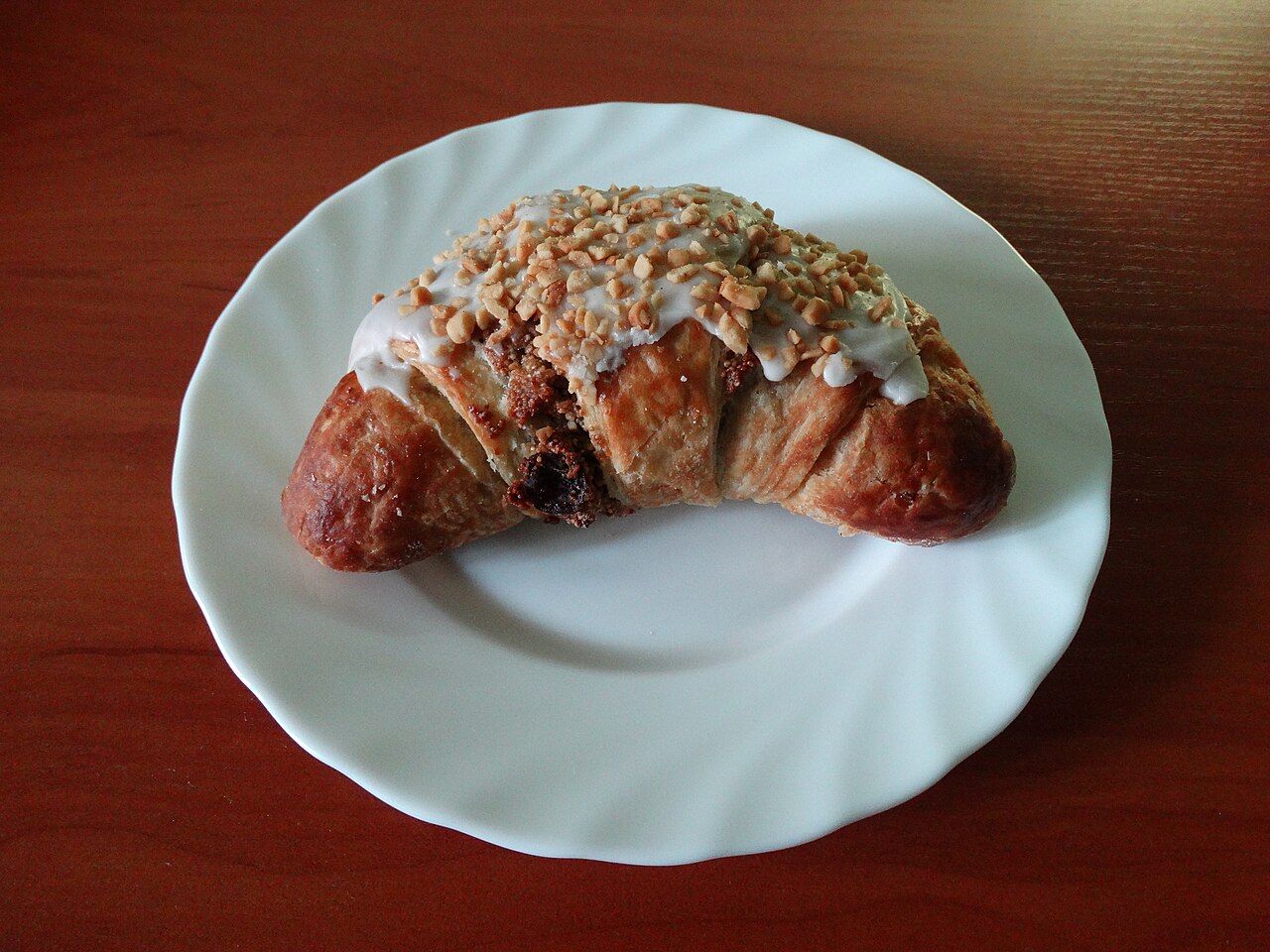
The rogal świętomarciński — iced, nut-crowned and protected by EU law since 2008. Photo: Wikimedia Commons.
Then the lawyers arrived, in the best possible way. On 30 October 2008, rogal świętomarciński was entered in the European Union's register of protected geographical indications: only certified bakeries in Poznań and a few surrounding counties may sell a pastry under that name, and only if it follows the registered specification — the weight, the white poppy filling, the icing, the nuts. On November 11 the certified bakeries work through the night and the queues wrap around the block; Poznań eats rogale by the hundreds of thousands, and by local reckoning well over a million change hands across the celebration. It is the only pastry in Europe that can get you fined for a forgery — and one bite of the real one explains the entire legal apparatus.
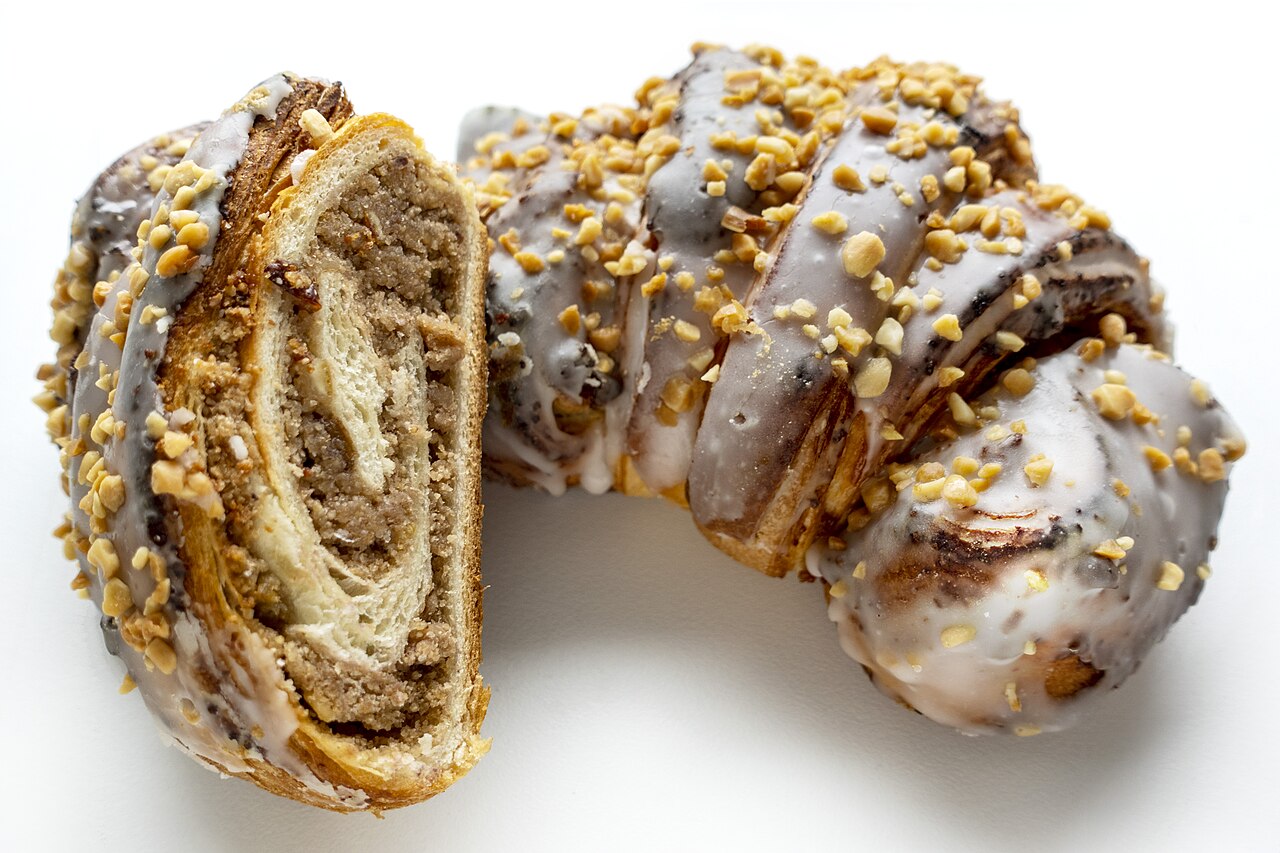
Cut open: the white poppy-seed heart of the rogal. Photo: Wikimedia Commons.
For the savoury side of the Polish winter feast, the Poland collection points to bigos, the hunter's stew: sauerkraut and fresh cabbage braised with kiełbasa, smoked bacon, mixed meats and wild mushrooms — and then, this is the whole point, reheated tomorrow and the day after, as tradition demands, until it deepens into something sour, smoky and foresty that no first-day stew can imitate. Bigos travelled in barrels with hunting nobles, kept through winter campaigns, and was praised in Pan Tadeusz, Poland's national epic — a stew with a literary reputation to match its flavour, and the correct Polish answer to a dark November.
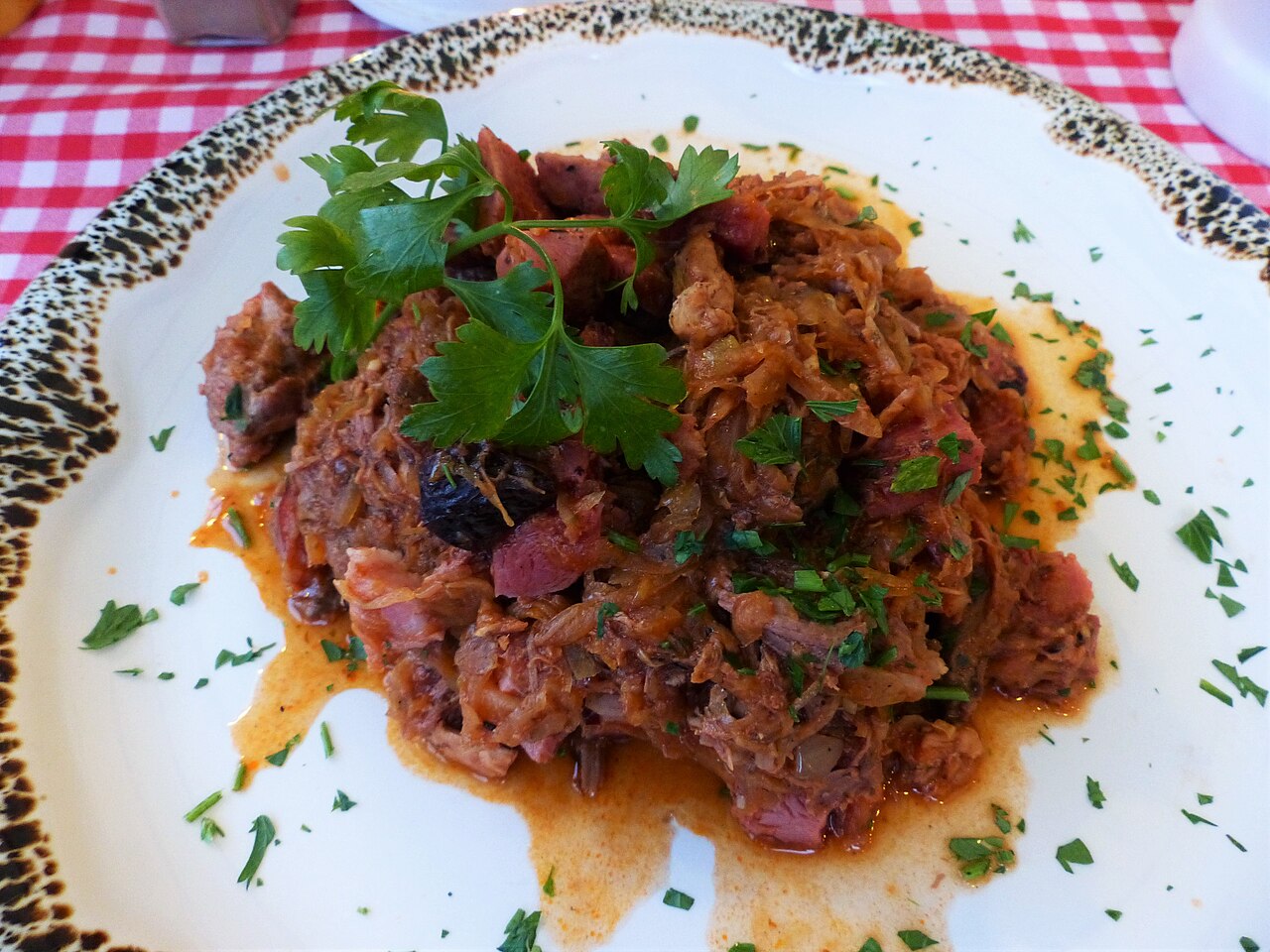
Bigos — Poland's hunter's stew, reheated for days until it deepens. From the World Cuisines Poland collection.
The wider Polish table in the collection is built for the whole season: pierogi, the hand-crimped crescents filled with potato and cheese, sauerkraut or meat, glossed with butter and onion — and destined, in their sauerkraut-and-mushroom form, for the Christmas Eve table we will visit in December. Beside them stand żurek, the tangy fermented-rye soup served with white sausage and egg, often in a bread bowl, and kotlet schabowy, the golden breaded pork cutlet of the Polish Sunday. Independence Day, a parade, a protected croissant and a stew that improves for three days: Poland does not do November by halves.
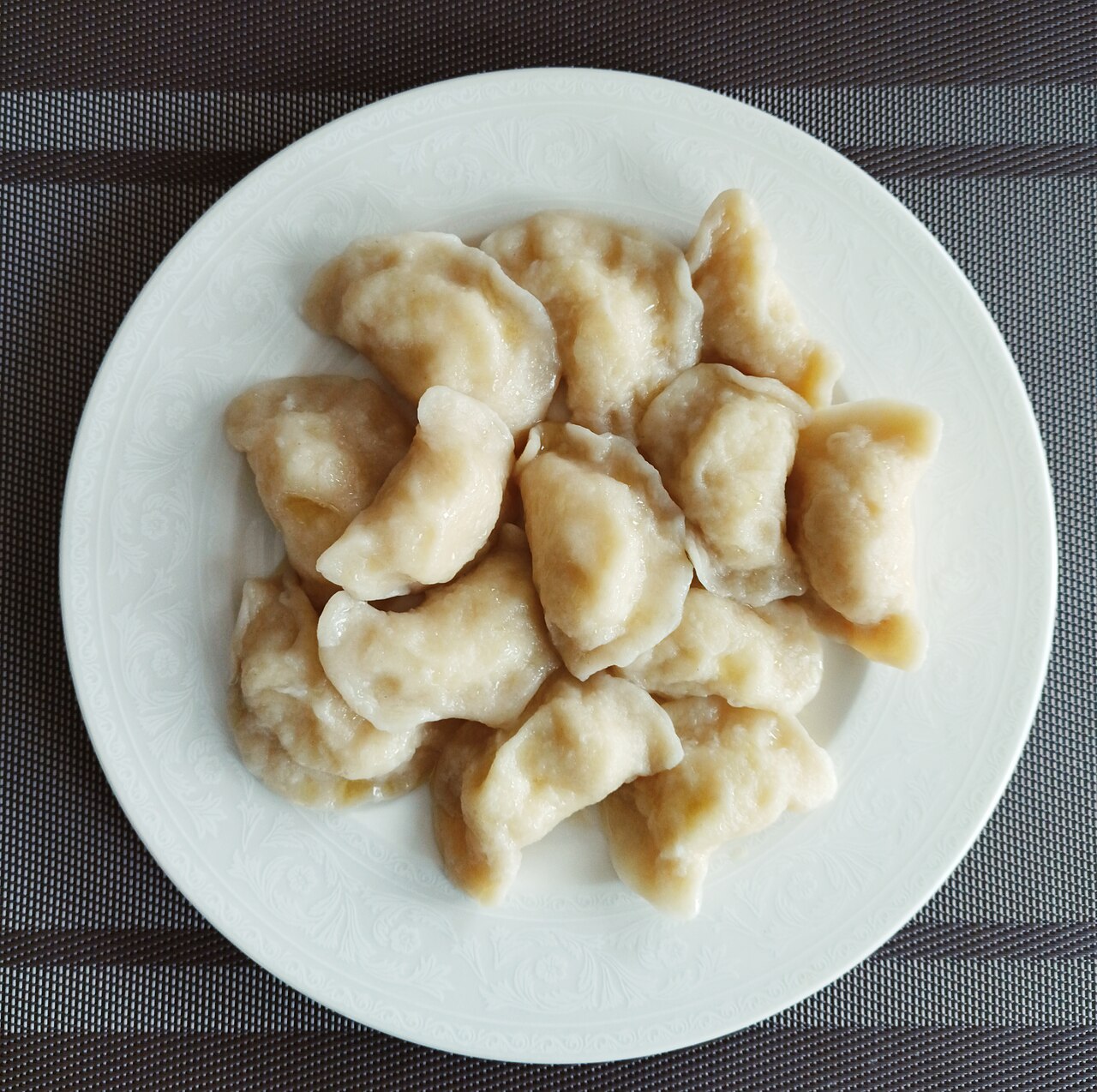
Pierogi — the crescent dumplings that anchor the Polish feast table all winter. From the World Cuisines Poland collection.
🇦🇹 Austria: Martinigansl, blessed wine and the strudel ending
Austria shortens the goose to a nickname — Martinigansl, "little St. Martin's goose" — and serves it in inns for weeks around the day, with red cabbage and bread dumplings, while the country's wine regions hold the season's other great ceremony. In Burgenland — the wine province that claims St. Martin as its patron — the new vintage is presented and blessed around his day; cellars open, the first glasses of the year are poured with ceremony, and in neighbouring Croatia and Slovenia the same date, Martinje, is traditionally the moment the must formally becomes wine. The first toast of the season, in other words, is poured today, within sight of the barrels it came from.
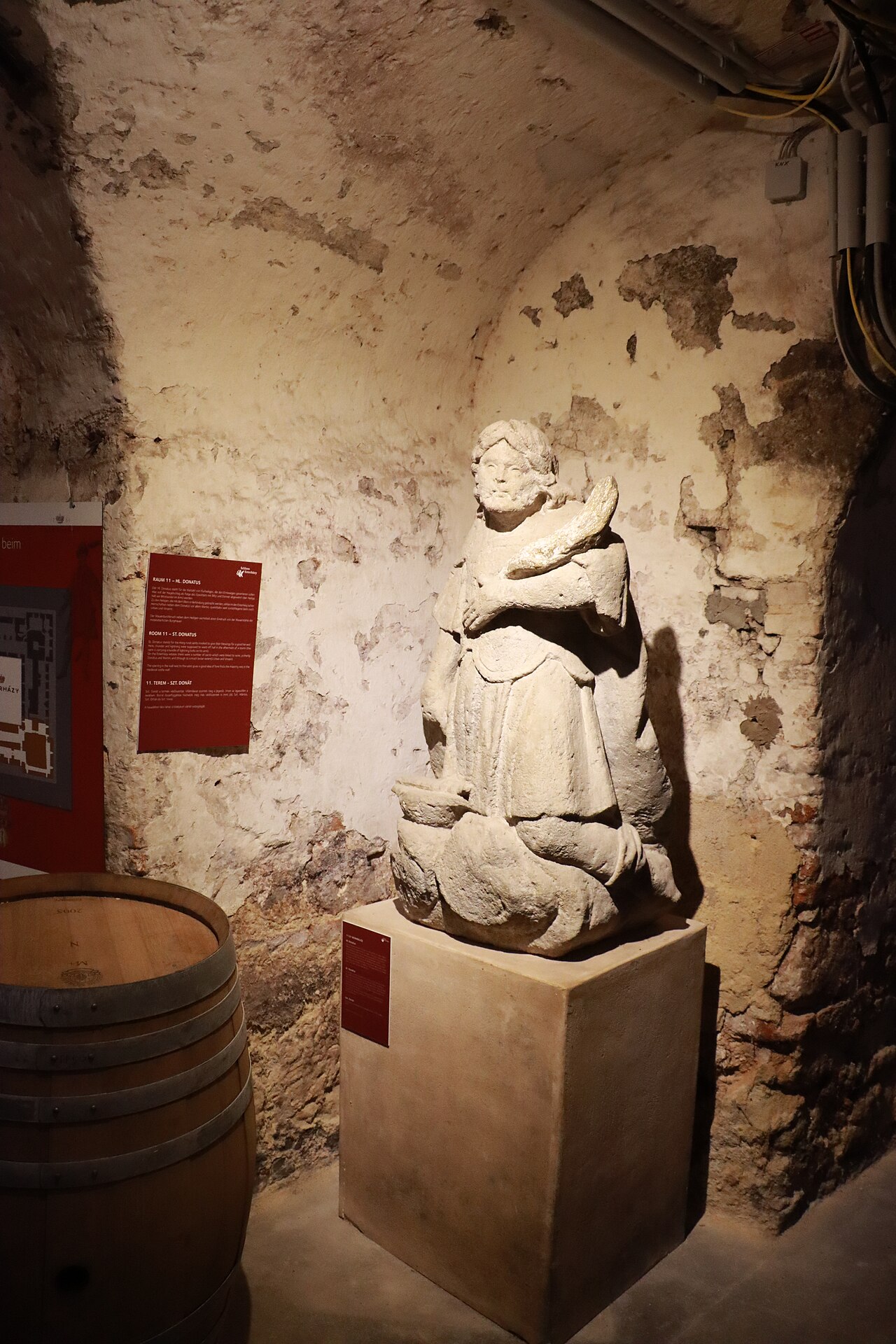
In the Esterházy palace cellars at Eisenstadt, Burgenland — where the new vintage is blessed around St. Martin's Day. Photo: Wikimedia Commons.
From the World Spirits Austria collection, the glass of the feast is Grüner Veltliner — Austria's flagship white, planted across roughly a third of the country's vineyards, all white pepper, green apple and citrus over a savoury mineral spine. Its most famous home, the Wachau valley on the Danube, grades its dry wines on a ladder of ripeness the region has used since 1983, and the ladder is worth learning because it turns one grape into three different wines: Steinfeder, the lightest, named for the feather grass of the terraces, at up to 11.5% alcohol; Federspiel, the elegant middleweight at 11.5–12.5%, named for a falconer's lure; and Smaragd, the ripest and most age-worthy, from 12.5% up, named for the emerald lizard that suns itself on the dry-stone walls. For roast goose, the peppery snap of a young Federspiel is the classic answer — it cuts the fat and seasons the bird at the same time.
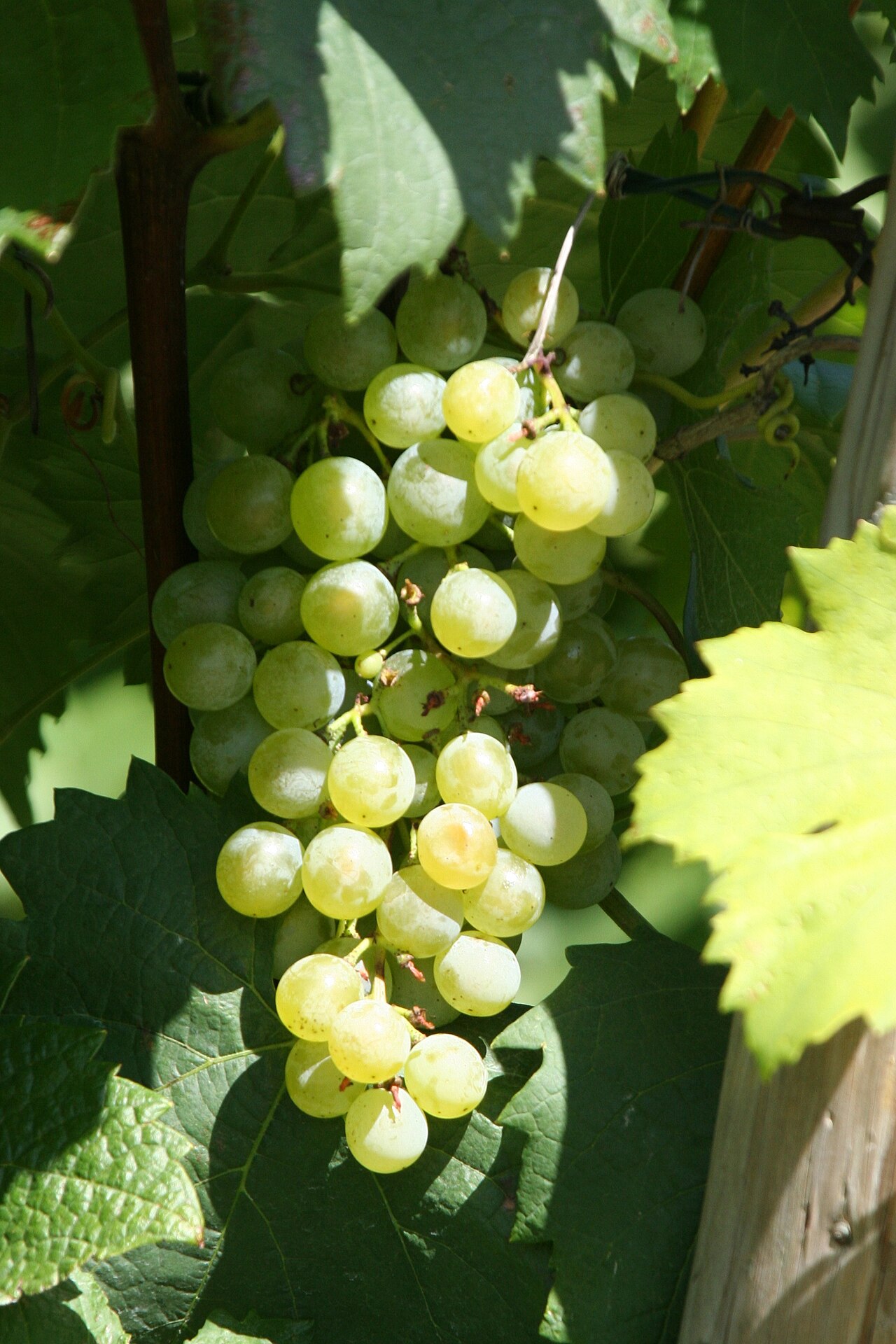
Grüner Veltliner — Austria's flagship white, and the new vintage is first blessed around St. Martin's Day. From the World Spirits Austria collection.
The Austrian cellar holds stronger medicine too. Austrian schnaps — the crystal fruit brandies of small farm stills, apricot from the Wachau, Williams pear, gentian and pine from the mountains — is the traditional close to a goose dinner, one small glass against the richness. And for the bakers there is Stroh, the spiced Austrian rum made since 1832, sold in strengths up to 80% and poured into Jagertee and Christmas baking all winter — the Alpine fire bottle makes its first appearance of the season right about now.
On the court's side of the table, the Austria collection keeps the two dishes Vienna gave the world. Wiener Schnitzel — veal pounded paper-thin, crumbed and fried in lard or clarified butter until the crust soufflés and lifts away from the meat — is the golden standard every breaded cutlet on Earth is measured against. And Tafelspitz, the Emperor Franz Joseph's beloved boiled beef, simmered in root-vegetable broth until silky and served with horseradish and crisp Rösti, is the feast's quiet, luxurious counterpoint: no browning, no crust, just broth, patience and the finest cut of the animal.
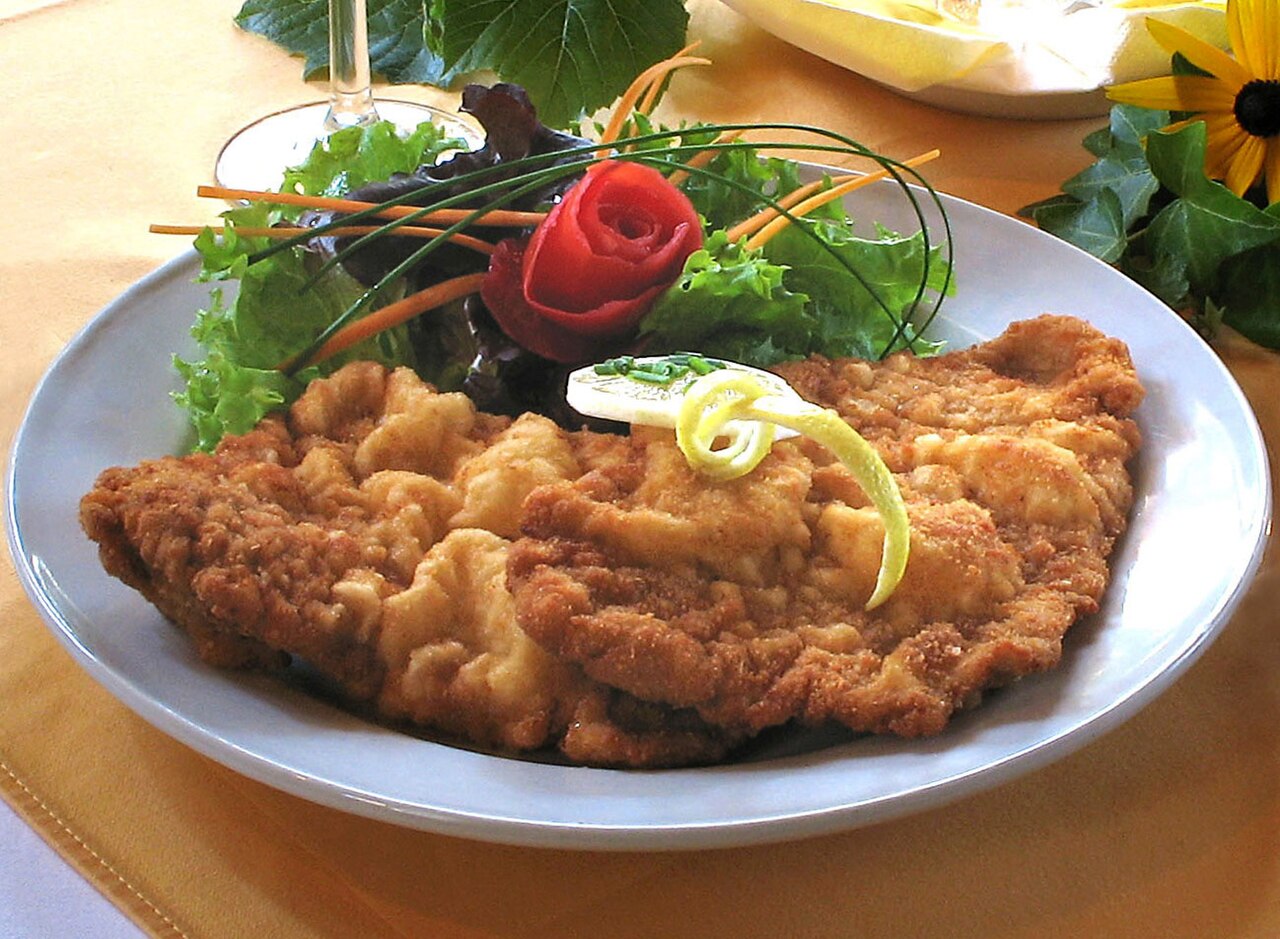
Wiener Schnitzel — the crust must soufflé away from the meat. From the World Cuisines Austria collection.
And then the ending — because no Austrian feast table closes without Apfelstrudel: dough stretched by hand over the back of the knuckles until you can read a love letter through it, rolled around cinnamon apples, raisins and buttered crumbs, served warm under a snow of icing sugar. Strudel travelled from Ottoman baklava technique through Hungary into the Viennese court kitchen — the Habsburgs' signature sweet. Its only rival at the same table is Sachertorte, Vienna's chocolate legend: two dense chocolate layers, apricot jam between and through, and a dark, glossy glaze, served with unsweetened whipped cream to cut the richness. Goose, blessed wine, strudel still warm: Austria's opening feast is a complete argument for November.
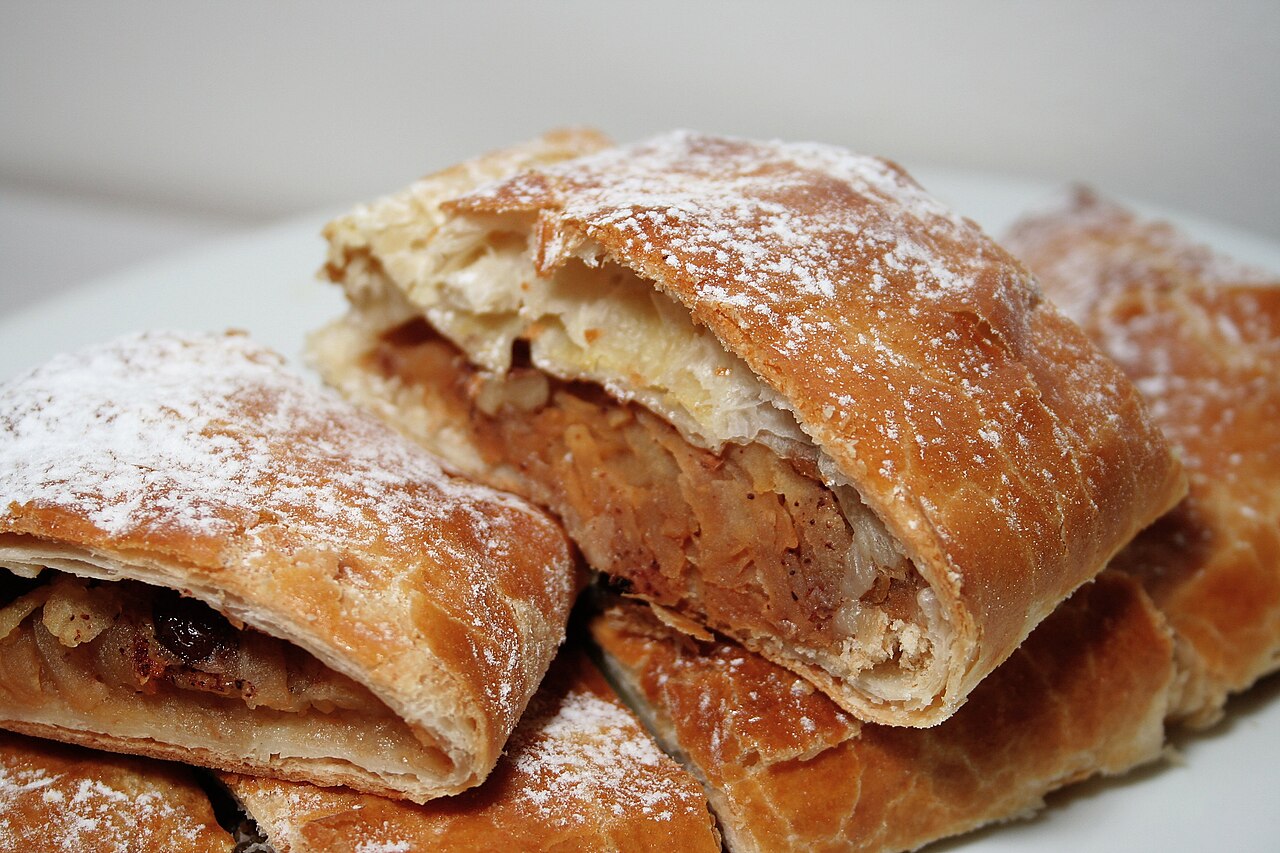
Apfelstrudel — pastry stretched thin enough to read a love letter through, rolled around cinnamon apples. From the World Cuisines Austria collection.
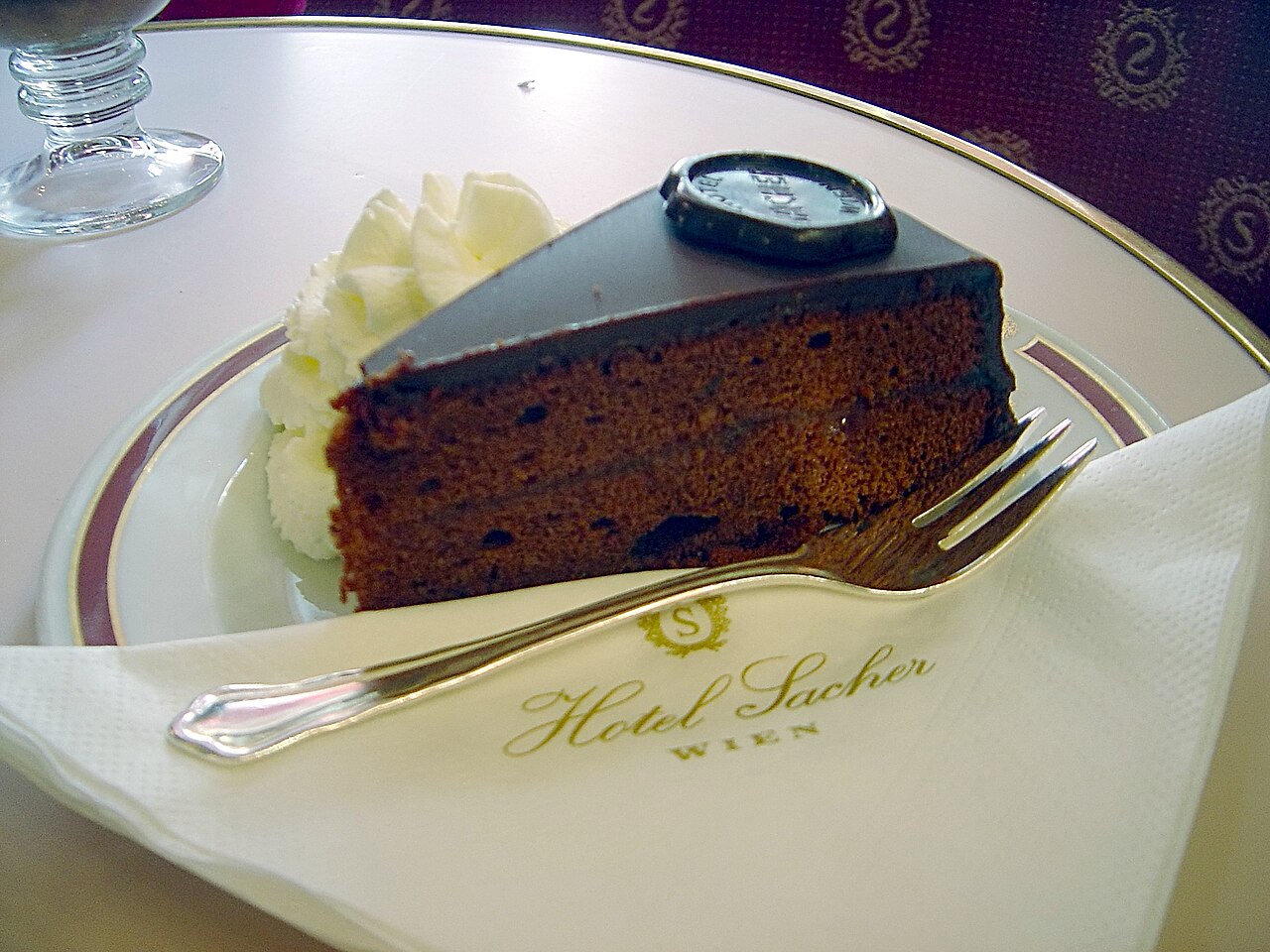
Sachertorte — Vienna's chocolate legend, apricot-bright under a dark glossy glaze. From the World Cuisines Austria collection.
The first toast of the season is poured today — in the cellars of Burgenland, over a goose in Slovakia, beside a bonfire in Germany. Christmas gets the glory; St. Martin does the work.
From a saint's feast to your city's table
The Holiday Table travels all season — and when a feast makes you hungry for a restaurant table instead of a history lesson, the CallPages restaurant guides carry the same dish-by-dish honesty to the cities we track, every menu with its real prices: Paris, Rome, Madrid, San Francisco and New York. Europe's feasts built the repertoire; these guides show you where it is being cooked tonight.
The season ahead
That is day one — rebuilt the way every day of this season will now be built: deep, visual and linked dish by dish. Ahead of us: Thanksgiving on November 26, the December feasts — St. Nicholas, St. Lucia, Las Posadas, Nochebuena, Christmas tables from four continents — then New Year as a dozen cultures eat it, Three Kings on January 6, Orthodox Christmas, Lunar New Year and Carnival, all the way to February 20. Every day, one feast and the dishes that carry it, each one already waiting in the guides:
- World Cuisines — 781 dishes, 199 country collections, each dish with its origin, ingredients and history.
- World Spirits — 266 drinks, from the wines blessed this week to the bottles opened at New Year.
- ¿Lees en español? Esta misma mesa está servida en español: El Día de San Martín.
And keeping the night watch over the whole season — while Europe feasts by lantern light, our own host works the dark hours:

Your host for the season: the Múcaro, Puerto Rico's night owl, in CallPages acid colours. He keeps the night watch while Europe feasts.
Tomorrow, the table travels. Bring an appetite.
How it works
- Every featured dish and drink comes from the CallPages World Cuisines and World Spirits guides — 781 dishes and 266 drinks with their origins, ingredients and histories — linked dish by dish below.
- Holiday dates and customs are verified against published sources for the 2026–27 season; legends are labelled as legends.
- The Holiday Table runs daily from November 11, 2026 to February 20, 2027: one feast, one culture (or several), one story per day, through Thanksgiving, the December feasts, New Year, Three Kings, Lunar New Year and Carnival.
Related reading
Innovation by Vasily Starostenko, founder of CallPages.