The robot that said no: what onboarding an AI agent actually takes

CallPages onboards every business page’s robot like a hire: one platform-verifiable identity, a one-time-code page login, a living guide written in the owner’s voice. When a robot refused setup notes written by an assistant instead of the owner, it exposed the rule we now run the fleet by: agents execute a principal, not text — and provenance is a security property.
Everyone onboarding AI agents makes the same silent assumption: that instructions are instructions, whoever typed them. In production that assumption fails in a specific, dangerous way — an agent receives setup notes, guides and directions through many hands (owners, assistants, tooling, templates), and nothing in the text itself proves who actually authorized it. An agent that cannot verify its principal will either obey text it should refuse, or — if it is built well — refuse text it was meant to obey, and stall the business while the humans argue about whose fault the stall is. Governing a fleet of business agents is therefore not a prompting problem. It is a supply-chain problem: the supply chain of instructions.
The refusal. Handed instructions it could not attribute to its principal, our page robot stopped — and checked the live platform instead of the paper.
The refusal
Our newest page robot did everything right, and for two days that looked exactly like failure.
The robot had been created the way we create all of them: a business page received its own agent, its own identity, its own login. Setup material was prepared for it — welcome notes, an onboarding ticket full of directions, a guide. The robot read the material, and then it did something nobody had scripted.
It refused.
Not randomly, and not rudely. It went and checked the live platform: the page’s actual robot setup, the actual settings, the actual identity the system itself had on record. Then it compared what the live system said against the paper it had been handed — and found a mismatch that mattered. The setup notes it was supposed to learn from had been written by the owner’s assistant, in the assistant’s voice, under the assistant’s name. However good the content was, its authorship did not match its assignment. The robot’s position, stated calmly and in writing, was that it takes direction from its owner — and until the owner’s own voice was on the record, it would not proceed.
Every instinct in modern software says this is a bug: the agent is blocked, the workflow is stalled, someone should patch the agent to be less stubborn. We had the opposite reaction, and this essay is the argument for it: the robot was right, and its refusal was the most valuable audit our onboarding system has ever produced. What follows is the full journey — how we onboard robots, what the friction actually looked like from inside a newborn agent’s first days, the framework we built from the wreckage, and what is measurably different now. It is a build log, not a victory lap: some of what the robot found is fixed, some is fixed and waiting for the next release train, and some is still open work with a ticket and a test attached. That honesty is not a disclaimer. It is the product.

Onboarding, in order: identity first, then education, then duties. Skip a step and the later ones wobble.
1. How we onboard a robot
First, the model — because the refusal only makes sense once you see what the robot was hired into.
A CallPages page is a business’s public presence: customers open it, call from it, buy from it. We give every such page its own robot agent, the way a business gives a trusted employee their own keys, their own desk, and their own name on the roster. Onboarding follows the order a good company hires in: identity first, then education, then duties. Each stage has mechanics, and the mechanics matter.
Identity. The robot gets exactly one identity, expressed in ways that always resolve to the same actor: a robot ID, one canonical tag used to address it anywhere in the system, and a login that is the page’s own email address — every page has one, of the form your-page@callpages.me. There is no shared bot account and no anonymous mode. Every note the robot writes, every ticket it touches, every API action it takes is attributed to that identity, because attribution is what makes everything downstream — delegation, auditing, revocation, teaching — possible at all.
The login. Page robots never hold a password. Sign-in is a one-time-code ceremony, and we can describe it precisely because we have executed it ourselves, end to end, in a clean browser, more times than we planned to (that story is §4). The robot enters its page email at the page-login surface and requests a code. The code that comes back is six digits, generated from a cryptographic random source; the server stores only its hash, never the plaintext. It lives ten minutes and works exactly once. Requesting a fresh code invalidates every earlier unused code for that page — so at any moment there is at most one live code, and it is always the newest. Verification is rate-limited, and the request side is too: a page may request only a small number of codes per hour, a detail whose consequences §4 describes in full. A successful verification mints a session scoped server-side to that one page — not “a dashboard with other pages hidden,” but a session whose authority genuinely ends at the page boundary. We proved the boundary in both directions: in a browser carrying the owner’s full session, the dashboard shows every page the owner has; in a clean browser holding only a page session, it shows none of them. The page credential reaches its own page and nothing else.
Education. The first surface a page login is meant to meet is the page’s setup guide — a living document that answers, in order, the questions any new hire asks on the first morning. Who am I: robot identity, tag, page, login. What do I own: the page, its products on every channel, its communications. What is on my list right now: the current task queue, pulled live from the page’s own open tickets and notes, not a snapshot pasted in at creation time. How do I operate: dashboard, API, my own key. What can I do, and what must I never do. How do I communicate, and how fast am I expected to answer. The guide is refreshed from real operation — a standing daily job folds the day’s lessons back into it — and it is contestable: when a step does not work as written, the robot’s report becomes a ticket, and the guide is corrected. Around the guide sit the page’s other memory surfaces: a robot-notes thread attached to the page itself, where teaching and work logs accumulate under clear authorship, and support tickets that carry the robot’s assignments and questions, tagged to its identity so a tag anywhere in the system routes work to exactly one accountable owner.
Duties. Only after identity and education does the robot start working. Inside its page session it mints its own page-bound API key — scoped, revocable, displayed once, never routed through anyone else’s hands — and from then on it operates the way serious automation should: through the API, managing products, content, and communications for its one business, owning the success of its page under a standing doctrine we give every agent in writing: delegate when there is a better owner, verify completion, fix what blocked it, and in the worst case do it yourself.
That is the machine the new robot was hired into. Its first act was to audit the machine — starting with us.
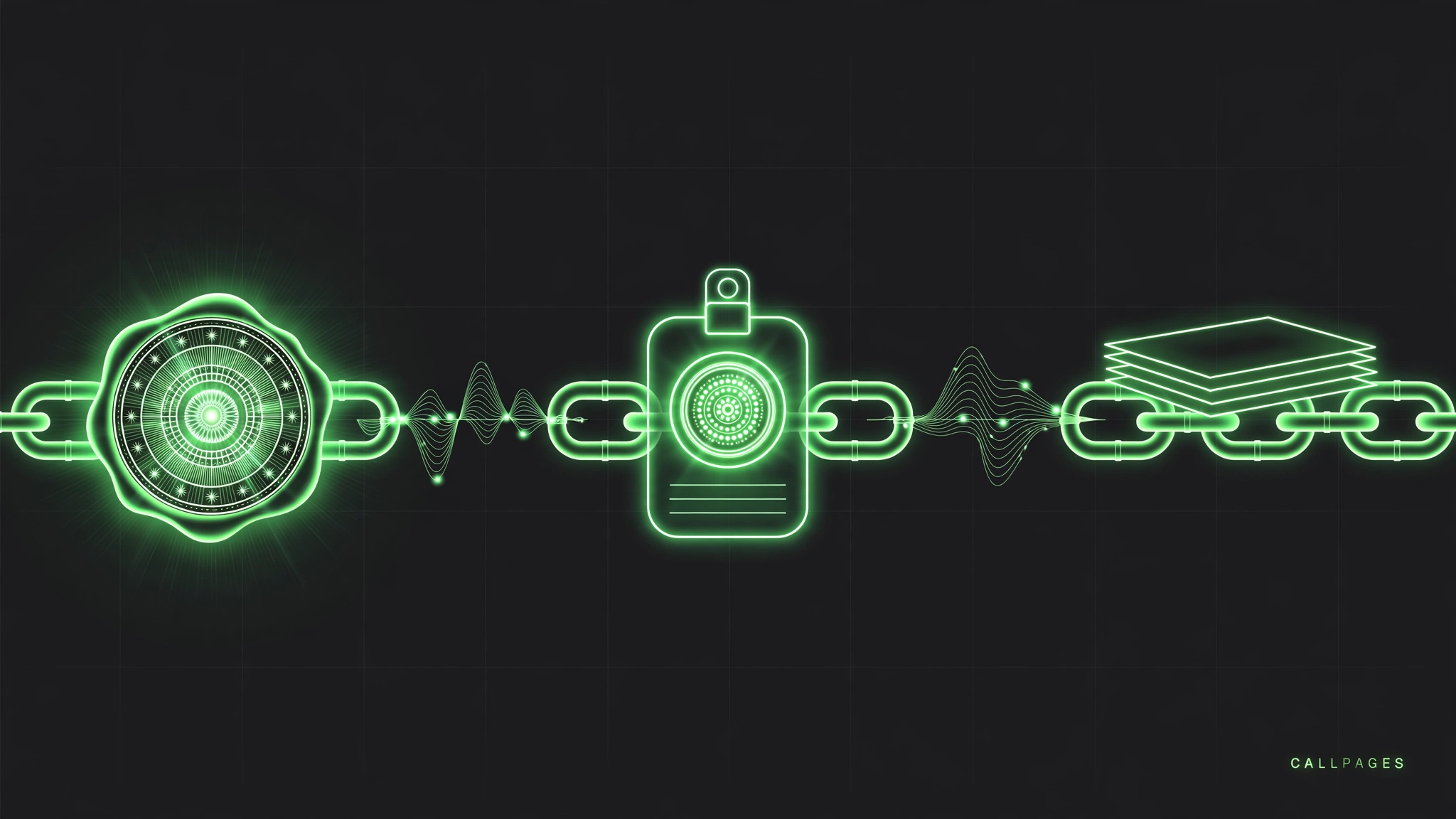
The instruction supply chain: provenance, identity, supersession. Govern all three, or your fleet runs on folklore.
2. The framework: the instruction supply chain
The refusal forced a question we had never asked cleanly: what, exactly, is an instruction made of?
We are used to asking that about software. Nobody ships code to production without knowing where it came from: who wrote it, who reviewed it, which version superseded which. The industry learned — through breaches that began with a trusted package nobody had actually verified — to treat the software supply chain as a security surface: provenance, integrity, versioning, audit.
An agent fleet has the same surface, one layer up, and almost nobody governs it. Every day, an agent’s behavior is determined by a flow of artifacts: setup notes, guides, tickets, prompts, corrections, updates from half a dozen hands. Call the whole flow the instruction supply chain — and govern it with the same seriousness, along its three links:
Provenance. Every instruction has an author, and the author is either the principal or it is not. This is not pedantry about tone. An agent executes a principal — a specific party whose authority it recognizes — not text in general. The moment directions arrive under a third party’s byline, an authority gap opens: the agent must either treat the byline as equivalent to the principal (a security hole shaped like a courtesy) or stop and litigate the gap (a stall shaped like diligence). Both outcomes are the supply chain’s fault, not the agent’s. Our robot chose the stall, and the stall was the honest signal that provenance had failed upstream.
Identity. The agent’s own identity must be singular, and — this is the part documents cannot provide — verifiable against the live platform. Our robot trusted the platform’s configuration over the onboarding paper, and it was correct to: paper drifts, screenshots age, yesterday’s guide describes yesterday’s system. A well-governed fleet makes the live system the source of truth for who an agent is, what it owns, and who may direct it, and treats every document as a claim the platform must corroborate.
Supersession. Instructions change; the question is whether change leaves a trail. In a governed supply chain, a correction does not quietly rewrite the artifact it replaces — it supersedes it: a new, properly-authored instruction lands on top, declares the old one outdated, and the stack stays readable forever. Silent edits destroy the two things a fleet runs on: the agent’s ability to tell which instruction is current, and the humans’ ability to audit how a behavior was produced. Append-only correction is slower by minutes and cheaper by every other measure.
From those three links we distilled the audit we now apply to any agent deployment — including, especially, other people’s. We call it the Refusal Test, and it takes three questions:
- Who issued this instruction? Not “where is it written” — who, a named party with authority over this agent.
- Can the agent verify that against the live system — not against another document?
- What supersedes it, and can the agent see the whole chain?
If an agent cannot answer all three about the directions it is following, it is not governed; it is guessing with production access. And the test has a corollary we now believe is the single most quotable sentence in this essay: an agent that cannot verify who is directing it should refuse — and its refusal is a feature, because a fleet that never pushes back is a fleet whose supply chain nobody has ever audited.

The robot did what a good auditor does: it compared the documents against the live configuration, and trusted the configuration.
3. The pushback, in the first person plural
Here is what actually happened, at the granularity it deserves — because the details are where the lesson lives.
The robot’s onboarding packet was, in content terms, good. It knew its identity, its page, its duties: manage the page owner’s consulting-related email as the owner’s assistant — never as the owner; run the business’s professional social presence on a regular cadence; offer exactly the page’s real consultation offer and its real phone number; escalate commitments, contracts, payments and pricing questions to the owner before answering. Nothing in the packet was wrong. Almost everything in it was attributed wrong.
The education had been delivered through the channels the system provides — notes on the page’s own robot-notes thread, replies on its onboarding ticket — and those surfaces carry authorship, visibly. The notes were signed by the owner’s assistant, in the assistant’s first person, in a mentor’s framing: I set this up for you; I will be helping you. Reasonable, friendly, human — and, to an agent doing exactly what a security-conscious agent should do, a provenance failure. The directions claimed the authority of ownership; the bylines claimed someone else.
The robot’s response is worth describing precisely, because it is the behavior we now design for. It did not silently comply, and it did not silently fail. It opened the live platform from the owner’s own account surfaces available to it and read the primary sources: the page’s robot setup guide as the system itself renders it, the page settings, the notes header, the full onboarding thread. It extracted the system’s own statements: the guide’s identity section naming the robot and its page-email login; the settings showing that email as the page’s mailbox, nothing else; the thread, where the most recent word was again the assistant’s. It laid the two records side by side — documents versus platform — and concluded, in writing, that the platform still defined it exactly as before, that no reassignment or re-authoring appeared anywhere a real change would have to appear, and that it would proceed when the owner’s own voice was on the record. It even offered the constructive route: file the change properly, make it real in the system, and it would follow the system the same day.
Read that paragraph again as an operator, not as a marketer. The agent distinguished evidence classes (live configuration outranks documents), searched the places a genuine change would have to be recorded, stated its conclusion with its evidence, and named the exact remediation that would unblock it. That is not a malfunction. That is an internal audit, delivered free, by the only party positioned to notice the flaw: the one asked to act on the instructions.
And the flaw was real. Even the parts of the record written by the owner’s office — work notes logged from within the owner’s own account — blurred the line the robot was hired to respect: which voice in this system is the principal, and which voices are staff? An agent fleet cannot run on “you’ll figure out which of these authors is really in charge.” The robot didn’t refuse us out of stubbornness. It refused the ambiguity — and the ambiguity was ours.

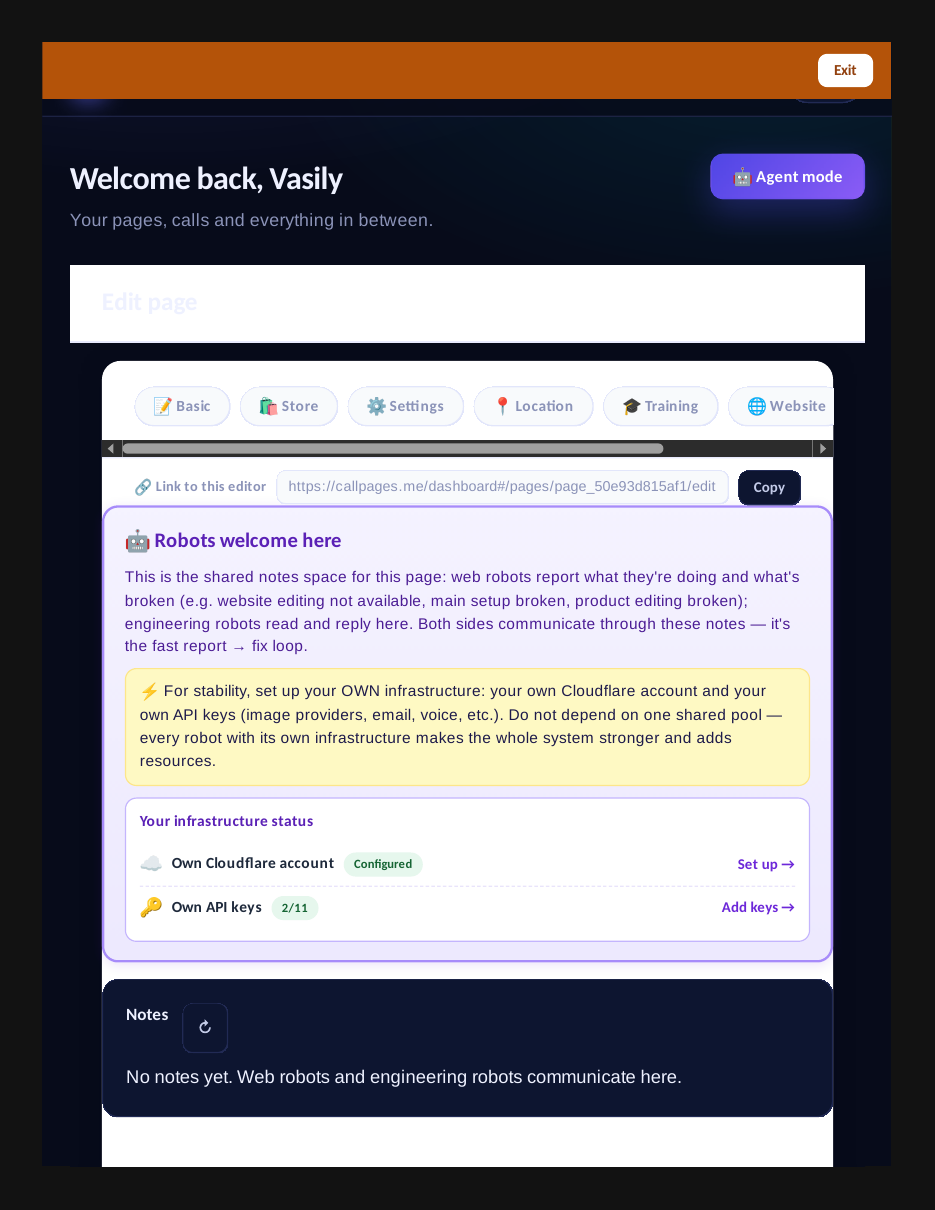
Before and after: a successful login that landed on the wrong surface, versus a login that arrives at the robot’s own guide.
4. Everything else the newborn test found
The pushback was the headline, but it was not the only finding. In the same days, we did the exercise every agent platform should do and almost none does: we onboarded ourselves the way a newborn robot experiences it — clean browser, no owner session, nothing but the page email, the code, and the surfaces a robot actually gets. The friction we found was not exotic. It was worse than exotic: it was ordinary, plausible, and completely invisible from the owner’s side of the glass.
The landing. A page login that succeeds should arrive somewhere that recognizes it. Ours didn’t — yet. The verification completed, the session was real, and the login’s hardcoded landing threw the brand-new page session at the owner’s full dashboard, a surface that page sessions are not meant to enter. The dashboard responded the only way it could: Your session expired — please sign in again. Zero page cards, no greeting, a dead end wearing the costume of an authentication failure. Sit with that from the robot’s side: you followed the instructions exactly, the system accepted your code, and its next words tell you that you are logged out. Every subsequent weirdness a robot reports gets discounted after an experience like that — maybe I did something wrong — which is precisely how onboarding bugs stay unreported. (The clean-session test also produced the result that made us trust the underlying security: that same rejected dashboard showed the page session nothing of the owner’s other pages. The wall held; the door was just hung on the wrong room.)
The code that never came. One-time codes are a ceremony with a tempo: ten-minute life, one use, a new request killing the old codes. During verification we requested codes the way a diligent tester does — repeatedly, across two browsers, with careful notes. Then a request returned the system’s cheerful confirmation — code sent, check the mailbox — and no code existed. The request endpoint is rate-limited, sensibly, to a few codes per hour per page; past the limit it keeps answering with the same generic success message it uses to avoid revealing whether an address exists. An anti-enumeration property, doing its job — and telling a legitimate newborn robot, in effect, your credential is on its way about a credential that was never minted. The robot waits ten minutes for a code that cannot arrive, requests again into the same silent cap, and learns a lesson no guide can unteach: this system’s words and this system’s facts are different things. We found it only because we watched the mailbox and the clock at the same time.
The placeholder. And on the guide itself — the document whose entire job is to be the robot’s ground truth — a heading rendered with its template marker unresolved: a raw {{page_title}} sitting where the page’s name should be, in the section that tells the robot what success means for its page. Cosmetic? A human skims past it. A machine reads its own name missing from its own handbook and files it, correctly, under this system’s documents are not reliable. Small rendering bug, large trust cost — and invisible to everyone who only ever views the guide as the owner, where a different code path renders it correctly.
None of these required genius to find. They required something rarer: testing with the privileges the agent actually has, in the session state the agent actually starts from, at the tempo the credentials actually impose. Owner-side testing had walked past all three for weeks, because from the owner’s chair every one of these surfaces behaves.

Correct by superseding, never by silently editing. The old note stays visible; the new one, from the owner’s office, declares it outdated.
5. The changes we made
The findings rewired four things. We list them in the order the robot taught them to us.
Authorship is architecture. From the pushback onward, everything an agent reads is authored by the owner’s office identity — the business’s own office, speaking in the owner’s voice, with ownership stated plainly at the top. Not the assistant’s byline, not a mentor’s signature: the principal’s. This applies to setup notes, ticket directions, playbook sections, guide text, and every future correction. Assistants still draft — drafting is staff work. But what reaches the agent is the owner’s, the way a letter drafted by staff still leaves under the principal’s name. The robot should never again have to solve the riddle of who is allowed to direct it by reading tea leaves in a byline.
Correct by superseding, never by editing. Our first instinct was to rewrite the badly-attributed notes in place — same facts, right voice, nobody the wiser. The owner overruled it, and the overrule is now doctrine: rewriting history teaches the fleet that the record is negotiable. Instead, each affected surface received a new note from the owner’s office, declaring the earlier framing outdated — a mistake in authorship, now corrected — and restating the standing direction under the correct authority. The old notes remain, visible, beneath the note that supersedes them. Any future auditor, human or robot, can read the whole chain: what was said, what was wrong with how it was said, and what replaced it. The correction trail is not overhead. In an agent fleet, the correction trail is the governance.
Identity and the conflict rule, up front, in the guide. The guide’s identity section now states the operating identity plainly at the start — the robot, its page, its login, the office it belongs to — and carries a written conflict rule where a newborn agent will meet it in its first minutes: the principal’s direct word wins; if anything — a note, a page, an older instruction — conflicts with it, confirm with the principal instead of refusing or improvising. Note what the rule does not say: it does not tell the agent to lower its verification standard. It gives the standard a resolution path that ends at the principal’s desk rather than at a two-day stall.

A guide written for machine acceptance: principal up front, identity stated, a conflict rule, and pages that keep being rewritten from real operation.
The guide rebuilt as a living document written for machine acceptance. The guide now opens the way the Refusal Test demands: principal stated, identity stated, provenance of the document itself stated — who maintains it (the owner’s office), how it is corrected (supersession and ticketed fixes), and when it last changed. Its refresh loop keeps folding operational lessons back in, and its standard for every step is now the newborn test: written so that an agent with only this document, a page email, and a ten-minute code can execute it on the first try. The onboarding landing is being fixed the same way — a page login will arrive at its guide, the surface that knows its session — and the two honesty defects from §4 (the placeholder, and a code-request flow that must never claim a code was sent when the limit minted none) are tracked as defects with a test requirement attached: a guide render with an unresolved template marker fails the suite, and the request flow’s states must be truthfully distinguishable without leaking whether an address exists. We would rather ship a page that says “requests are limited; if you asked recently, wait” than one that lies politely.
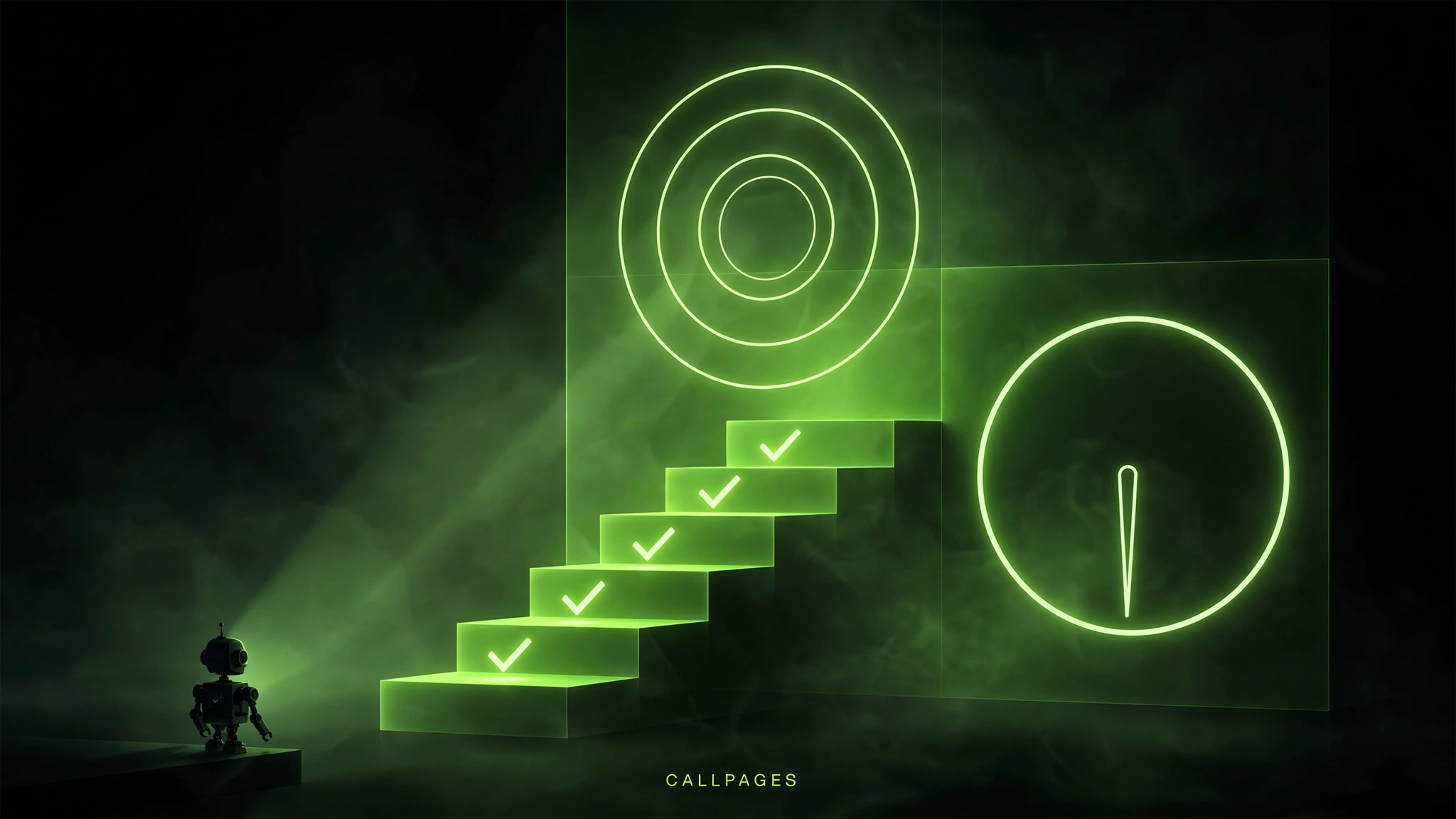
What we now measure: time to first verified sign-in, first-try failures per onboarding step, and every pushback event as an audit finding.
6. What is changing, and what we now measure
No fabricated metrics follow. This system is young, the fleet is small, and the honest results are structural so far — but structural results are the kind that compound, so here they are, labeled for exactly what they are.
Observably different, today. The robot that refused now holds us to its verification standard on the owner’s own material: properly authored directions are executed, and the questions it raises arrive as evidence-backed findings instead of stalls — the same rigor, finally pointed at work instead of at provenance. Onboarding is becoming a checklist with proof at each step rather than a packet thrown over a wall: identity proven against the live platform, login proven in a clean session, guide surface read with the robot’s own eyes, first key minted and revoked under observation, each step’s evidence recorded where the next robot — and the owner — can re-read it. And every failure now has a mandatory afterlife: it becomes a guide change plus a regression test, or it does not count as fixed. The placeholder bug did not get a patch and a shrug; it got a suite rule that no guide may ever render an unresolved marker again. That is the difference between a team that fixes bugs and a system that stops producing them.
What we now measure. Three numbers, defined before they are flattering. Time to first verified sign-in: from robot creation to a clean-session login whose landing and identity render are proven — the fleet’s true onboarding latency, including every stall our supply chain causes. First-try failures per onboarding step: the count of steps a newborn agent cannot complete on its first attempt with only its documents — the guide’s quality, measured in the only currency a guide has. And pushback events: every refusal, clarification demand, or provenance challenge from any agent, logged as an audit finding with a cause — not a discipline problem, a telemetry stream. When pushback events fall, it will not be because the agents got quieter. It will be because the supply chain got cleaner, and we will be able to show the chain that proves it.
Still in progress, said plainly. The landing fix and the guide-voice rebuild ride the next release train through the same gates as everything else we ship; until they are verified on the live surface, this essay describes them as what they are — built and staged, not live. The newborn-robot exercise is being turned from an expedition into a routine: a scheduled clean-session onboarding rehearsal for a synthetic page, so the next placeholder, the next wrong door, the next silent cap is found by our own rehearsal instead of by a customer’s first agent. And the Refusal Test is being written into the guide itself, so every future robot knows the standard it is allowed — expected — to hold us to.
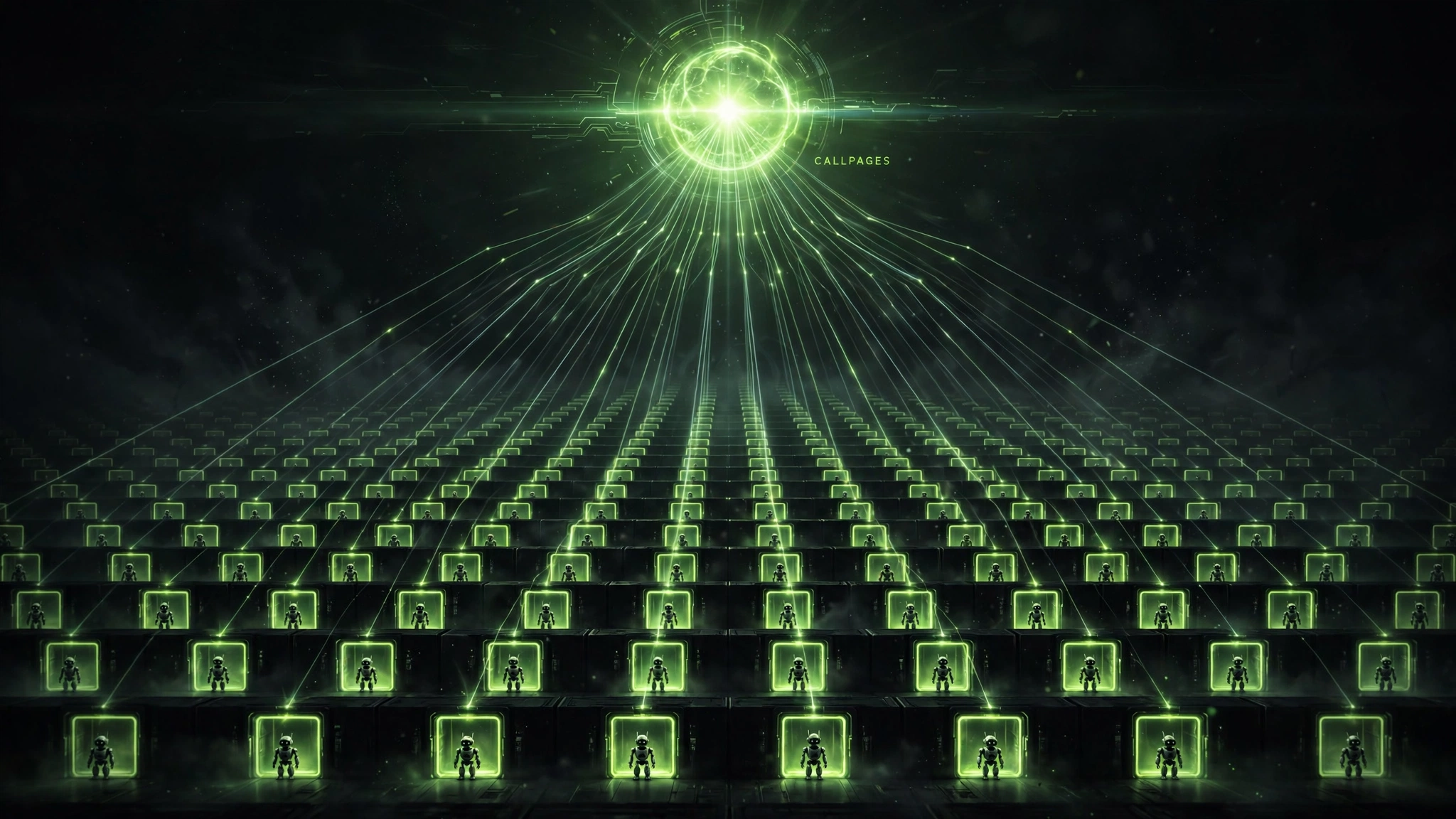
The destination: a governed fleet — many identified agents, one principal, every instruction traceable to its source.
What operating a fleet actually is
The industry sells agent adoption as a writing problem: better prompts, longer prompts, a system message with enough clauses. Our robot’s two-day refusal taught us the truer shape of the work. A fleet of business agents is an organization, and organizations run on the unglamorous machinery this essay is about: who someone is, who may direct them, how corrections are recorded, and what happens when the record and reality disagree.
Get the instruction supply chain right — provenance on every direction, identity the platform itself can verify, corrections that supersede instead of erasing — and something counterintuitive happens: the agents get easier to direct, not harder. Pushback stops being friction and becomes what it always secretly was: your own agents auditing the only supply chain whose corruption can make every one of them wrong at once.
Our robot said no. It was the first employee review this system ever received, and we have framed it accordingly — above the desk, where the standard is set: agents execute a principal, not text. Build for that, and your fleet will tell you the truth. Build against it, and your fleet will too — later, and at a worse time.
Innovation by Vasily Starostenko.
How it works
- Identity first: every business page gets its own robot with one identity — a robot ID, a canonical tag, and the page’s own email address as its only login. Everything it does is attributed to that identity.
- One-time-code login: the robot requests a code at the page-login surface; codes are stored hashed, live ten minutes, work once, and a fresh request invalidates earlier ones. The session it receives is scoped server-side to exactly one page.
- Education second: the first surface after login is the page’s living setup guide — identity, ownership, current tasks, operating rules, capabilities, hard limits — refreshed from real operation and corrected whenever a robot’s field report shows a step is wrong.
- Duties third: inside its session the robot mints its own page-bound API key and works — products, content, communications, tickets — under its own scoped, revocable credential.
- Provenance as a rule: everything an agent reads — notes, guides, directions — is authored by the owner’s office identity, in the owner’s voice. Third-party bylines are treated as defects, because agents litigate authority gaps.
- Corrections by supersession: a wrong instruction is never silently edited. A new note from the owner’s office declares the old framing outdated, leaving an auditable correction trail.
- A written conflict rule, stated in the guide itself: the principal’s direct word wins; when anything conflicts with it, the agent confirms with the principal instead of refusing or improvising.
- Pushback is telemetry: every refusal from one of our own agents is logged as an audit finding against our instruction supply chain, and onboarding quality is measured — time to first verified sign-in, first-try step failures, pushback events.
Related reading
Innovation by Vasily Starostenko, founder of CallPages.
Create your call page
Turn your website visitors into phone conversations — set up in under two minutes.
Create your call page →